
Teriyaki salmon is a quick, flavor-packed baked fish dinner that combines a homemade glaze of teriyaki sauce, hoisin, soy sauce, brown sugar, sesame oil, garlic, and ginger with tender, flaky salmon fillets in just 40 minutes.
This recipe skips complicated techniques and lengthy marinades, delivering rich, caramelized results that taste like a restaurant-quality Asian salmon dish made entirely at home.
| Detail | Info |
|---|---|
| Prep Time | 25 minutes |
| Cook Time | 15 minutes |
| Total Time | 40 minutes |
| Servings | 8 servings |
| Difficulty | Easy |
| Cuisine | Asian / Japanese-Inspired |
Table of Contents
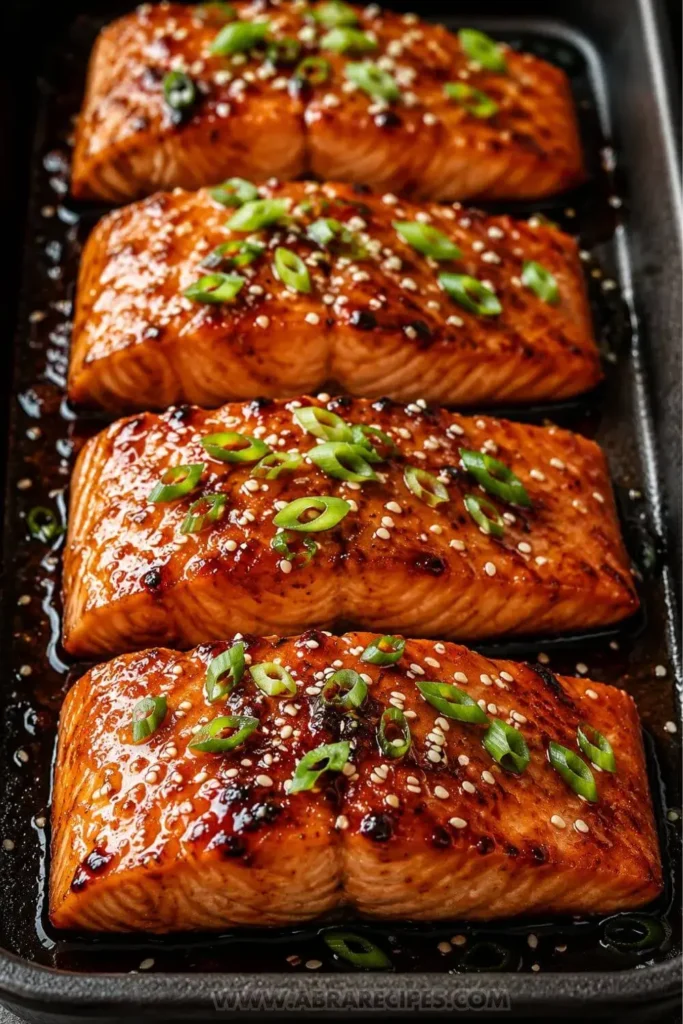
This teriyaki salmon recipe is my absolute go-to on weeknights when I want something impressive without the stress. Over the years of making this dish, I have tested it with both wild-caught sockeye and farm-raised Atlantic salmon, tweaked the sauce ratios more times than I can count, and watched family members go back for seconds who normally skip fish.
The magic is in the layered sauce: hoisin adds depth, brown sugar creates that gorgeous caramelized glaze, and fresh ginger cuts through the richness in a way that keeps every bite lively and balanced.
Two tips I swear by: first, pat the salmon fillets completely dry before adding the marinade. Any surface moisture dilutes the sauce and slows browning. Second, do not skip the step of reducing the leftover marinade on the stovetop.
That thickened glaze brushed on right as the salmon comes out of the oven is what transforms a good baked teriyaki salmon into a genuinely spectacular one. My family always asks for this dish on Sunday nights, and my son, who is notoriously picky about fish, requests it by name because, in his words, it “tastes like Panda.” High praise from a twelve-year-old.
Why This Teriyaki Salmon Recipe Works
The sauce formula is the foundation of everything here. Combining store-bought teriyaki sauce with hoisin sauce creates a base that is simultaneously sweet, savory, and slightly funky in the best possible way. Soy sauce deepens the salt level while white vinegar adds just enough acidity to keep the glaze from tasting flat. Brown sugar melts into the liquid and caramelizes in the oven’s heat, producing those sticky, lacquered edges that make baked teriyaki salmon so visually striking and delicious.
A 20-minute marinade at room temperature is genuinely all the time this salmon needs. Unlike overnight marinades that can break down delicate fish proteins and make the texture mushy, this short soak lets the fillets absorb the sauce aromatics without compromising their structure.
The result is salmon that stays moist and flaky inside while developing a richly flavored crust on the outside. If you enjoy honey-glazed salmon recipes with that same sweet-savory balance, this teriyaki version will immediately become a regular on your table.
Finishing the dish with a reduced glaze brushed over the hot fillets is the step that separates a good result from a great one. The reduction concentrates the sugars and aromatics, thickening the sauce into a syrup that clings to every flake. That final brush adds shine, depth, and a second layer of flavor that makes this salmon teriyaki recipe taste far more complex than its short ingredient list suggests.
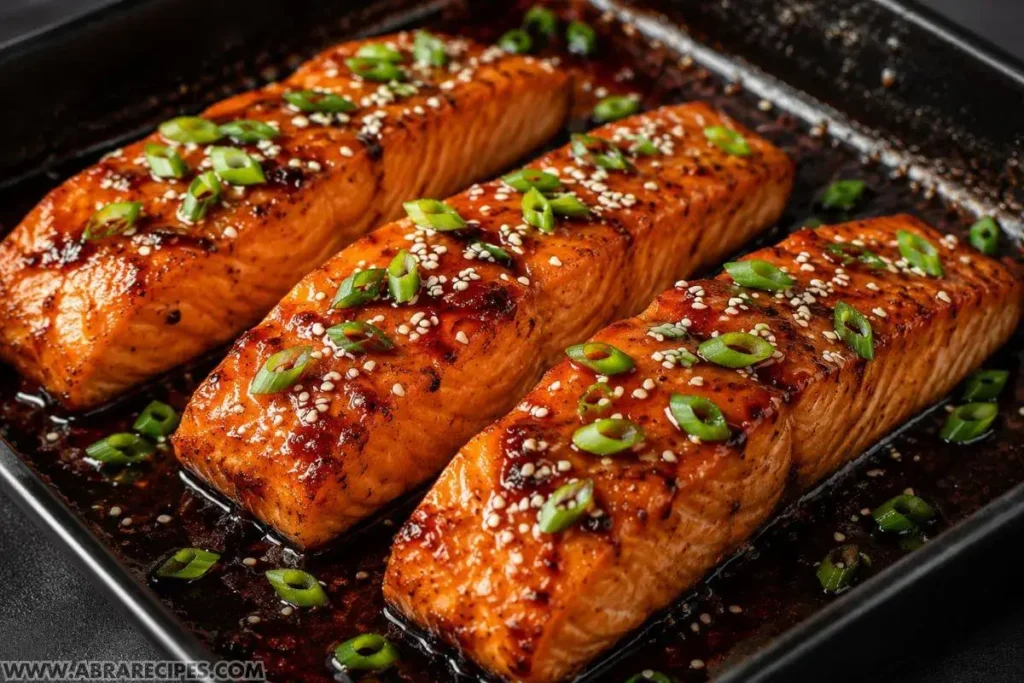
Ingredients for Teriyaki Salmon
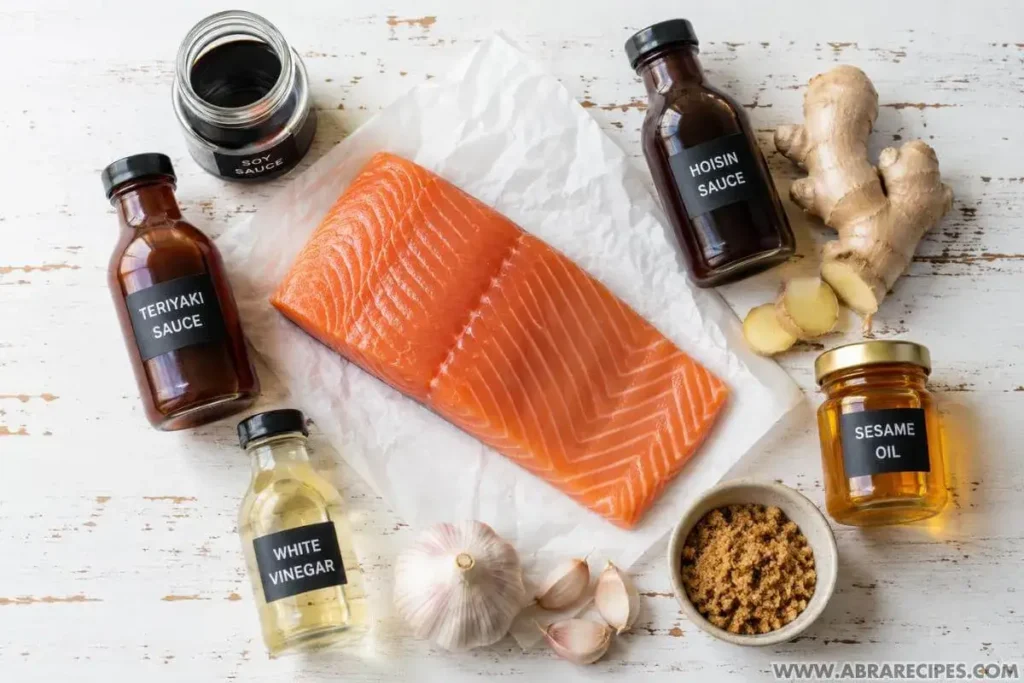
Every ingredient in this teriyaki salmon marinade plays a specific role. Use the best quality salmon fillets you can find, and do not substitute light soy sauce for regular, as the flavor difference is significant. For a gluten-free version, swap the soy sauce for Tamari brand and verify your teriyaki sauce is labeled gluten free.
| Ingredient | Quantity | Notes / Alternatives |
|---|---|---|
| Salmon fillets | 2½ lbs (about 8 slices) | Wild-caught sockeye or farm-raised Atlantic; cut into 2-inch wide portions |
| Teriyaki sauce | 3 tablespoons | Kikkoman or any quality brand; use gluten-free for GF version |
| Hoisin sauce | 3 tablespoons | Adds depth; omit and add ½ tbsp extra brown sugar if unavailable |
| Soy sauce | 3 tablespoons | Regular or low-sodium; Tamari for gluten free |
| White vinegar | 1 tablespoon | Rice vinegar works well and adds mild sweetness |
| Sesame oil | 1 tablespoon | Toasted sesame oil for strongest flavor; do not substitute vegetable oil |
| Light brown sugar | ⅓ cup, packed | Dark brown sugar deepens molasses notes; maple syrup is a lighter substitute |
| Garlic cloves | 2 large or 3 medium, minced | Fresh is strongly preferred; ½ tsp garlic powder in a pinch |
| Fresh ginger | 2 teaspoons, freshly grated | Ground ginger (½ tsp) is an acceptable substitute but less vibrant |
| Sesame seeds | To taste | Garnish only; white or black sesame both work |
| Green onion | 2–3 stalks, sliced | Garnish; chives are a mild substitute |
Mise en Place and Prep Steps
- Remove salmon from refrigerator 15 minutes before marinating to take the chill off for more even cooking.
- Pat each salmon fillet completely dry with paper towels on all sides.
- Slice a whole fillet into 2-inch-wide portions if starting from a large piece.
- Peel and finely mince the garlic cloves; peel ginger and grate it on a microplane or the fine side of a box grater.
- Measure all sauce ingredients into a small bowl: teriyaki sauce, hoisin sauce, soy sauce, white vinegar, sesame oil, and brown sugar.
- Stir the sauce until the brown sugar is fully dissolved before pouring over the fish.
- Line a large rimmed baking sheet with aluminum foil and grease it with cooking spray or a thin layer of oil.
- Preheat the oven to 400°F (204°C).
- Slice green onions and set aside with sesame seeds for finishing.
How To Make Baked Teriyaki Salmon Recipe Step-by-Step
Step 1: Make the Teriyaki Marinade
- Combine teriyaki sauce, hoisin sauce, soy sauce, white vinegar, sesame oil, brown sugar, minced garlic, and grated ginger in a bowl.
- Stir vigorously until every grain of brown sugar dissolves completely and the sauce is uniform in color and texture.
Step 2: Marinate the Salmon
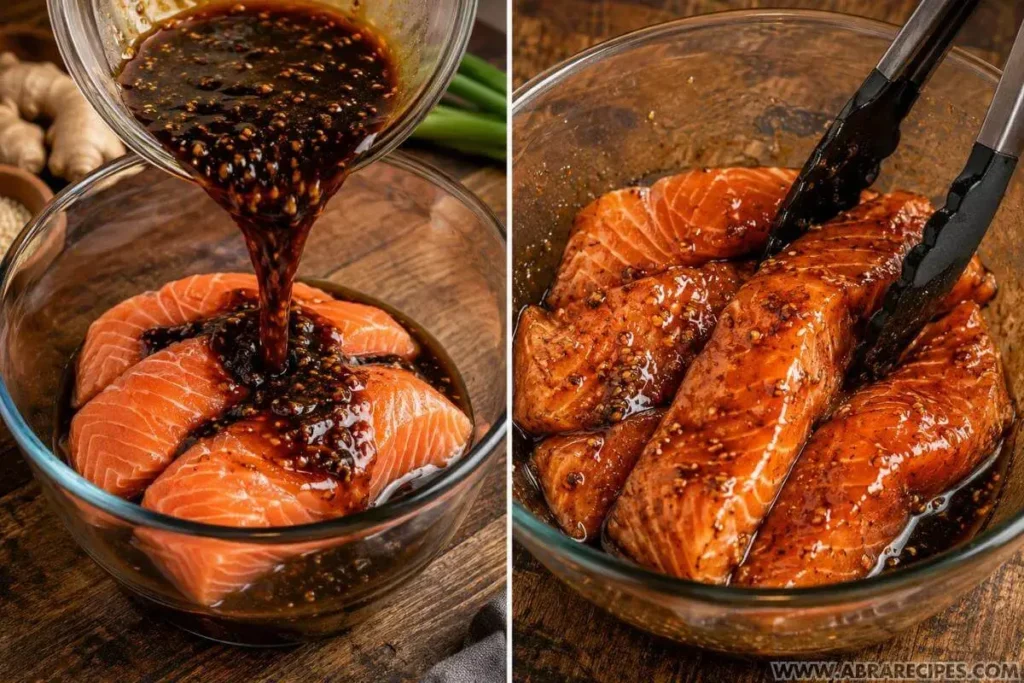
- Place the dried salmon portions in a large mixing bowl in a single layer.
- Pour the teriyaki marinade over the salmon, turning each piece to coat all surfaces thoroughly.
- Cover the bowl with plastic wrap and marinate for 20 minutes at room temperature, or refrigerate for up to 2 hours.
Step 3: Bake the Salmon
- Transfer marinated salmon pieces to the prepared baking sheet, spacing them slightly apart; reserve the remaining marinade in the bowl.
- Bake at 400°F for 12 to 16 minutes, checking at the 12-minute mark, until the thickest part flakes easily with a fork and reaches an internal temperature of 125–130°F for medium or 145°F for fully cooked.
Step 4: Reduce the Glaze
- While the salmon bakes, pour the reserved marinade into a small saucepan over medium-high heat.
- Bring to a boil, then reduce to a gentle simmer and cook, stirring occasionally, for 3 to 4 minutes until the sauce thickens into a syrupy glaze.
- Remove from heat and set aside.
Step 5: Glaze and Serve
- Remove salmon from the oven and brush each fillet generously with the reduced teriyaki glaze.
- Scatter sliced green onion and sesame seeds over the top and serve immediately.
Chef Tips for Perfect Teriyaki Salmon Results
- Pat the fish completely dry before marinating. Surface moisture is the enemy of a caramelized glaze. Even 30 seconds with paper towels makes a measurable difference in how the sauce adheres and browns.
- Watch baking time closely based on salmon type. Wild-caught fillets like sockeye are thinner and less fatty than farmed Atlantic, so they cook faster and overcook more easily. Start checking at the 12-minute mark for wild salmon and 14 minutes for farmed.
- Do not skip reducing the marinade. The raw marinade is too thin to cling. Two minutes of simmering concentrates the sugars and creates the sticky, lacquered finish that defines a great restaurant-quality salmon glaze.
- Use fresh ginger, not powder, whenever possible. Freshly grated ginger delivers a bright, slightly spicy note that ground ginger cannot replicate. A microplane makes grating effortless and produces very fine, fibrous-free results.
- Let the salmon rest for 2 minutes after brushing with glaze. This brief rest allows the glaze to set slightly on the surface, so it does not all run off when you plate and cut the fish.
- Line the baking sheet with foil, then grease the foil. The brown sugar in the glaze burns onto bare metal and is nearly impossible to clean. Foil reduces cleanup from 20 minutes to 20 seconds.
Teriyaki Salmon Recipe
- Total Time: 40 minutes
- Yield: 8 servings 1x
Description
This teriyaki salmon recipe combines a homemade glaze of teriyaki sauce, hoisin, soy sauce, brown sugar, sesame oil, garlic, and ginger with tender salmon fillets baked to flaky perfection in just 40 minutes. No lengthy marinating needed, just bold, caramelized flavor with minimal effort.
Ingredients
- 2½ lbs salmon fillet, sliced into 2-inch wide portions
- 3 tablespoons teriyaki sauce
- 3 tablespoons hoisin sauce
- 3 tablespoons soy sauce (or Tamari for gluten free)
- 1 tablespoon white vinegar
- 1 tablespoon sesame oil
- ⅓ cup packed light brown sugar
- 2 large garlic cloves, minced
- 2 teaspoons freshly grated ginger (or ½ tsp ground ginger)
- Sesame seeds to garnish (optional)
- Green onion, chopped, to garnish (optional)
Instructions
- Make the Sauce: Combine teriyaki sauce, hoisin sauce, soy sauce, white vinegar, sesame oil, brown sugar, garlic, and ginger. Stir until brown sugar dissolves.
- Marinate the Salmon: Pat salmon dry, place in a bowl, pour sauce over fillets, cover, and marinate 20 minutes at room temperature.
- Prep and Preheat: Grease a foil-lined rimmed baking sheet. Preheat oven to 400°F (204°C).
- Bake the Salmon: Transfer salmon to baking sheet, reserving marinade. Bake 12–16 minutes until flaky and cooked through.
- Reduce the Glaze: Bring reserved marinade to a boil in a small saucepan, then simmer 3–4 minutes until thickened.
- Glaze and Serve: Brush salmon with reduced glaze, sprinkle with sesame seeds and green onion, and serve immediately.
Notes
Pat salmon completely dry before marinating for the best glaze adhesion. Always boil the reserved marinade before using as a finishing sauce. Wild-caught salmon (sockeye, coho) cooks faster than farm-raised, check at 12 minutes. For a gluten-free teriyaki salmon, use Tamari and certified gluten-free teriyaki and hoisin sauces.
- Prep Time: 25 minutes
- Cook Time: 15 minutes
- Category: Main Course
- Method: Baking
- Cuisine: Asian / Japanese-Inspired
Nutrition
- Serving Size: 1 fillet (1/8th of dish)
- Calories: 276
- Sugar: 11g
- Sodium: 797mg
- Fat: 10g
- Saturated Fat: 1g
- Unsaturated Fat: 9g
- Trans Fat: 0g
- Carbohydrates: 13g
- Fiber: 1g
- Protein: 29g
- Cholesterol: 78mg
Keywords: teriyaki salmon, baked teriyaki salmon, teriyaki salmon bowl, asian salmon recipes, teriyaki salmon marinade
Common Mistakes to Avoid When Making Teriyaki Salmon
Mistake 1: Over-marinating the salmon. Why it happens: longer seems better. Why it hurts: salmon proteins begin to break down after about 2 hours in an acidic, salty marinade, producing soft, almost mushy flesh. Fix: 20 minutes at room temperature is ideal; 2 hours refrigerated is the absolute maximum.
Mistake 2: Using the marinade directly as a sauce without boiling it. Why it matters: the raw marinade has been in contact with raw fish and must reach a full boil before it is safe to eat. Fix: always transfer leftover marinade to a saucepan, bring it to a vigorous boil, then simmer to thicken before brushing it on the cooked salmon.
Mistake 3: Opening the oven repeatedly to check progress. Why it hurts: each door opening drops the oven temperature by 25 to 50 degrees, extending cook time and causing uneven results. Fix: check through the oven window and use a thermometer through the door rather than pulling the tray out repeatedly.
Mistake 4: Overcrowding the baking sheet. Why it hurts: fillets touching each other trap steam, preventing browning and producing a steamed rather than baked texture. Fix: leave at least half an inch of space between each piece, or bake in two batches on separate sheets.
Mistake 5: Skipping the internal temperature check. Why it happens: visual doneness cues like color are unreliable because salmon’s orange-pink hue changes subtly. Fix: use an instant-read thermometer and pull the fish at 125–130°F for moist, medium-done salmon or 145°F if you prefer it fully cooked through.
Variations and Substitutions for This Teriyaki Salmon Recipe
| Ingredient | Substitution | Impact on Flavor |
|---|---|---|
| Soy sauce (regular) | Tamari (gluten free) or coconut aminos | Tamari is nearly identical; coconut aminos are slightly sweeter and less salty |
| Hoisin sauce | Extra teriyaki sauce + ½ tsp five-spice powder | Loses some depth; five-spice partially compensates |
| Brown sugar | Honey or maple syrup (use 3 tbsp) | Honey adds floral sweetness; maple adds earthy warmth |
| White vinegar | Rice vinegar | Milder, slightly sweeter; excellent substitute |
| Fresh ginger | Ground ginger (use ½ tsp) | Less vibrant and slightly earthier; works in a pinch |
| Salmon fillets | Steelhead trout or Arctic char | Both absorb the teriyaki marinade beautifully with similar bake times |
| Baked method | Air fryer at 400°F for 8–10 min, or pan-fried 4 min per side | Air fryer teriyaki salmon gets slightly crispier edges; pan-fried adds more char |
If you want to try the teriyaki salmon in air fryer method, preheat to 400°F, place marinated fillets in a single layer in the basket, and cook for 8 to 10 minutes depending on thickness. The circulating air produces slightly crispier edges than oven baking. For teriyaki salmon pan fried, heat a tablespoon of oil in a non-stick skillet over medium-high heat and cook 3 to 4 minutes per side, adding the glaze in the final minute.
Serving Suggestions and Pairings
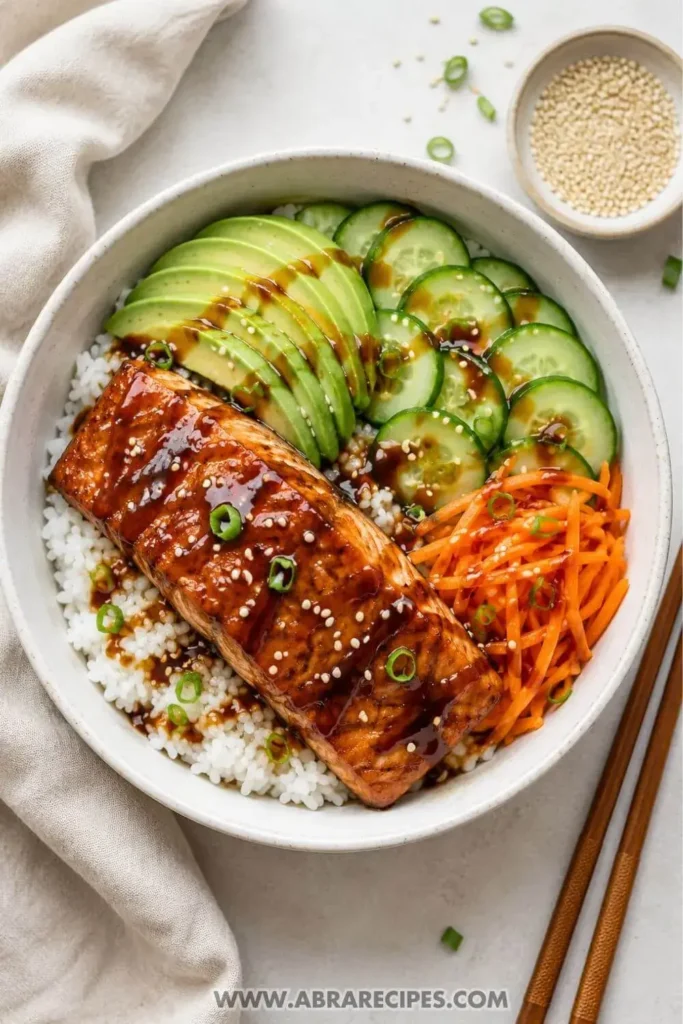
This baked teriyaki salmon is outstanding as the star of a teriyaki salmon bowl. Serve each fillet over a generous scoop of steamed jasmine or short-grain Japanese rice, add sliced cucumber, shredded carrots, and avocado, then drizzle with extra glaze. The bowl format is ideal for casual weeknight dinners and works beautifully for meal prep. For a lower-carb version, swap the rice for cauliflower rice, which absorbs the savory glaze just as well.
For a complete dinner plate, pair the salmon with steamed edamame, roasted broccoli, or a simple Asian coleslaw. A side of miso soup rounds out a traditional Japanese-inspired meal. For entertaining, serve the fillets alongside a sheet pan of roasted asparagus, which can go into the oven alongside the salmon for a complete one-pan dinner.
This recipe also shines at casual gatherings. Slice the baked salmon into smaller pieces and serve on a platter with toothpicks, a bowl of extra glaze for dipping, and sesame crackers. It disappears fast at parties, rivaling even the most popular crowd-pleasing appetizers.
Storage and Reheating Instructions
Store leftover teriyaki salmon in an airtight container in the refrigerator for up to 3 days. The glaze will firm up as the fish cools, which is normal. Keep any remaining sauce in a separate small container to refresh the flavor when reheating.
To reheat, place the salmon on a foil-lined baking sheet, brush with a little extra teriyaki glaze, and warm in a 275°F oven for 10 to 12 minutes until just heated through. Avoid the microwave, which generates steam and turns the fish rubbery. The salmon is properly reheated when it is warm to the touch at the thickest point and the glaze is glossy again.
To freeze, wrap individual portions tightly in plastic wrap, then place in a freezer-safe bag with the air pressed out. Freeze for up to 2 months. Thaw overnight in the refrigerator before reheating. Frozen and thawed salmon benefits from a fresh brush of glaze, as the original coating can separate slightly during freezing.
Nutritional Information
Approximate values per serving (1 of 8 portions, based on 2½ lbs total salmon).
| Nutrient | Amount per Serving |
|---|---|
| Calories | 276 kcal |
| Protein | 29g |
| Total Fat | 10g |
| Saturated Fat | 1g |
| Cholesterol | 78mg |
| Carbohydrates | 13g |
| Sugar | 11g |
| Sodium | 797mg |
| Potassium | 743mg |
| Vitamin A | 55 IU |
| Calcium | 31mg |
| Iron | 1.5mg |
Best Easy This Teriyaki Salmon Recipe
This teriyaki salmon recipe delivers everything a great weeknight dinner should: bold flavor from a genuinely simple sauce, reliably flaky texture with minimal effort, and a finished glaze that looks and tastes far more impressive than the 40 minutes it took to make.
Whether you plate it as a classic teriyaki salmon bowl over steamed rice or serve it straight from the baking sheet with roasted vegetables, this dish is one the whole table will ask for again. Make the sauce, marinate, bake, glaze, and enjoy every sticky, savory bite.
Follow me on PINTEREST for all of my latest blog posts, videos, and recipes.
FAQs About Teriyaki Salmon
Should I put teriyaki sauce on salmon before or after cooking?
Apply teriyaki sauce both before and after cooking for the best results. Marinating the salmon before baking infuses the fish with flavor, while brushing on reduced glaze after baking adds a shiny, concentrated coating that sticks to the surface. Using it only before cooking produces a less glossy finish, and using it only after misses the depth that comes from the sauce baking into the fish.
What is the best way to cook teriyaki salmon?
Baking at 400°F is the most reliable method for this teriyaki salmon recipe because it cooks the fish evenly without constant attention and allows the glaze to caramelize gently. Pan-frying produces excellent char and crispy edges but requires more active monitoring. Teriyaki salmon in an air fryer at 400°F for 8 to 10 minutes gives slightly crispier results than oven baking and works particularly well for thinner fillets. All three methods produce delicious results; the choice depends on the tools you have and how hands-on you want to be.
Can I marinate salmon in teriyaki sauce overnight?
Marinating salmon overnight is not recommended for this recipe. The combination of salt from the soy sauce and acidity from the vinegar begins to break down the proteins in salmon after about 2 hours, resulting in a softer, less appealing texture. Twenty minutes at room temperature is all this recipe needs, and the maximum safe marinating window in the refrigerator is 2 hours.
Is this teriyaki salmon recipe gluten free?
The recipe can be made fully gluten free with two substitutions: replace the regular soy sauce with Tamari (certified gluten free) and verify that your chosen teriyaki sauce brand is labeled gluten free, as many store-bought versions contain wheat. Hoisin sauce also commonly contains wheat, so use a certified gluten-free hoisin or replace it with an equal amount of extra teriyaki sauce plus a pinch of five-spice powder.
What type of salmon is best for a teriyaki salmon bowl?
Farm-raised Atlantic salmon is the most forgiving choice for beginners because its higher fat content keeps it moist even if it cooks slightly longer than planned. Wild-caught sockeye salmon has a deeper, richer flavor and a more vibrant red-orange color, making it visually stunning in a salmon teriyaki bowl. Coho salmon sits in between, offering good flavor and reasonable fat content at a lower price point than king salmon.
Can I make this teriyaki salmon ahead of time for meal prep?
Yes, this salmon works well for meal prep. Bake the fillets fully, cool them completely, then store in airtight containers in the refrigerator for up to 3 days. The flavor actually deepens slightly overnight as the glaze continues to penetrate the fish. Reheat gently in a low oven rather than a microwave, and portion into teriyaki salmon bowls with fresh rice and vegetables for quick, ready-to-go lunches throughout the week. For a variety of meal prep inspiration, the quinoa sweet potato bowl pairs well as a plant-based companion meal.
How do I know when baked teriyaki salmon is done?
The most reliable indicator is an instant-read thermometer: 125 to 130°F at the thickest point gives moist, medium-done salmon, while 145°F is fully cooked. Visually, the salmon is done when it transitions from translucent to opaque and flakes easily when pressed gently with a fork. The bake time ranges from 12 to 16 minutes at 400°F, with thinner wild-caught fillets finishing closer to 12 minutes and thicker farm-raised portions needing the full 16.