
Cajun Salmon is a pan-seared fish dinner recipe featuring bold Cajun seasoning, flaky wild-caught salmon fillets, and a silky garlic butter pan sauce built right in the same skillet. This dish is ready in under 30 minutes, making it one of the most reliable and rewarding salmon dinner recipes for any night of the week.
| Detail | Info |
|---|---|
| Prep Time | 5 minutes |
| Cook Time | 20 minutes |
| Total Time | 25 minutes |
| Servings | 2 servings |
| Difficulty | Easy |
| Cuisine | American / Cajun-Inspired |
Table of Contents
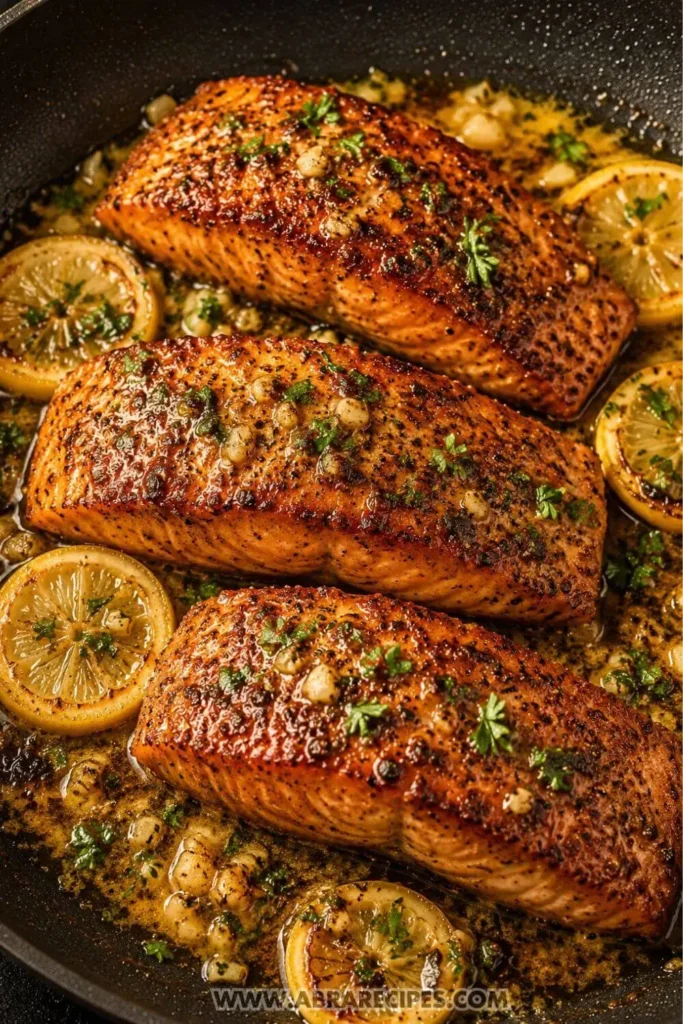
This Cajun Salmon is my absolute go-to when I need a dinner that feels special but demands almost no effort. Over the years of making this, I’ve tested every combination of heat level, butter ratio, and searing technique until I landed on the version you see here, one where the fish gets a deep mahogany crust and the pan sauce is just thick enough to spoon generously over each fillet. My family always asks for this recipe on weeknights when schedules are tight and appetite is big.
One pro tip that changed everything for me: pat your salmon fillets completely dry with paper towels before seasoning. Any surface moisture creates steam in the pan, which kills the crust. The second trick is to never move the fish once it hits the oil, press it down gently for the first 10 seconds, then leave it alone.
That patience is what gives you that golden, slightly smoky sear that makes these cajun salmon recipes so addictive. If you enjoy bold fish dinner recipes with minimal cleanup, this one belongs in your regular rotation.
Why This Cajun Salmon Recipe Works Every Time
The secret is a two-stage cooking process. Searing the salmon fillets flesh-side down first in olive oil creates a crust that locks in moisture and develops a deeply savory exterior that no amount of oven-baking can fully replicate. That crust is what separates a good salmon dinner from a great one.
The garlic butter pan sauce built from the fond left in the skillet adds another layer of complexity without any extra cookware. Chicken broth deglazes those caramelized bits, lemon juice brightens everything, and a finishing knob of butter ties the sauce together into something glossy and rich. For a variation, this lemon garlic salmon recipe follows the same technique with a slightly different flavor profile worth bookmarking.
Using skin-on salmon fillets during searing also acts as a natural buffer against overcooking, since the skin insulates the bottom of the fillet while the flesh side develops color. That small detail produces consistently juicy results, whether you’re working with Atlantic or wild-caught sockeye.
Ingredients for Cajun Salmon
| Ingredient | Quantity | Notes / Alternatives |
|---|---|---|
| Salmon fillets, skin on | 2-3 fillets (about 1 lb.) | Wild-caught preferred; Atlantic or sockeye work well. Skin-on keeps moisture in during searing. |
| Olive oil | 1 tbsp | Avocado oil is a good swap for higher smoke point. Avocado oil with garlic powder rubbed directly onto the fillet also works for an air fryer version. |
| Butter, divided | 3 tbsp | Unsalted preferred. Ghee is a solid substitute. |
| Garlic cloves, minced | 3 cloves | Fresh is best. 1 tsp garlic powder in the sauce works in a pinch. |
| Chicken broth (or fish broth) | ½ cup + 1 tbsp lemon juice | Vegetable broth works for a pescatarian version. |
| Lemon juice | 2 tbsp | Fresh squeezed only. About 1 medium lemon. |
| Fresh parsley, chopped | 2 tbsp | Fresh chives or dill are great alternatives. |
| Cajun seasoning | 1 tbsp, or to taste | Store-bought or homemade. McCormick Culinary Bayou Cajun is a reliable choice. |
| Salt and pepper | To taste | Season after applying Cajun seasoning to control overall saltiness. |
Mise en Place and Prep Steps
- Remove salmon fillets from the refrigerator 10-15 minutes before cooking to bring them closer to room temperature for even searing.
- Pat each fillet completely dry on all sides using paper towels.
- Measure out 1 tablespoon of Cajun seasoning and set aside, along with separate bowls for the salt and pepper.
- Mince 3 garlic cloves finely and keep them ready near the stove.
- Measure ½ cup chicken broth into a small pitcher and add 1 tablespoon of lemon juice to it.
- Juice the remaining lemon (about 2 tablespoons) into a separate small bowl.
- Chop 2 tablespoons of fresh parsley and set aside.
- Cut butter into 3 equal tablespoon portions for easy adding during cooking.

How To Make Cajun Salmon Recipe Step by Step
Step 1: Season the Salmon
- Season both sides of each salmon fillet with salt and pepper first, then apply 1 tablespoon of Cajun seasoning evenly across the flesh side. Press the seasoning gently to help it adhere.
Step 2: Sear the Salmon
- Heat 1 tablespoon of olive oil in a medium non-stick skillet over medium heat until the oil shimmers.
- Place the salmon fillets flesh-side down into the hot skillet. Press each fillet down gently for the first 10 seconds to guarantee full contact with the pan.
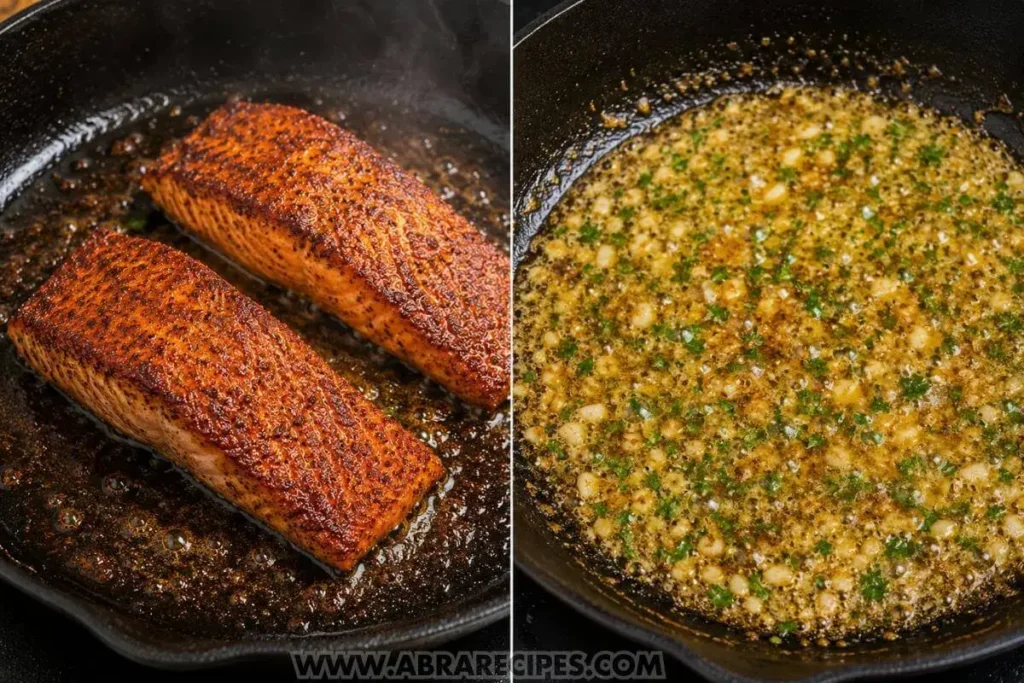
- Cook for 5 minutes without moving the fillets, allowing a golden crust to form on the flesh side.
- Flip each fillet to the skin side and cook for another 5 minutes, or until the fish reaches your preferred doneness. A fork inserted at the thickest point should flake the flesh easily.
- Transfer the salmon to a plate and set aside loosely.
Step 3: Build the Garlic Butter Sauce
- Add 1 tablespoon of butter to the same skillet over medium heat. Once melted, add the minced garlic.
- Cook the garlic for 1 minute, stirring constantly, until fragrant and just starting to turn golden.
- Pour in the ½ cup chicken broth mixed with 1 tablespoon lemon juice. Let the mixture come to a simmer.
- Cook the sauce uncovered for about 5 minutes, stirring occasionally, until it reduces by more than half and thickens slightly.
Step 4: Finish and Serve
- Stir in the remaining 2 tablespoons of butter, the chopped parsley, 2 tablespoons of lemon juice, and a pinch of Cajun seasoning. Let the butter melt fully into the sauce.
- Return the salmon fillets to the pan. Spoon the sauce over each fillet continuously for about 2-3 minutes, allowing the fish to warm through and absorb the flavors.
- Serve immediately with extra sauce spooned over the top and a wedge of lemon on the side.
Chef Tips for Perfect Cajun Salmon Results
- Dry the fish first, every time. Surface moisture is the enemy of a good sear. Even a few seconds of patting with paper towels produces a dramatically better crust compared to placing the fish straight from the packaging into the pan.
- Don’t crowd the skillet. If you are cooking more than 3 fillets, work in two batches. Crowding drops the pan temperature and causes the fish to steam rather than sear, which means no golden crust and less flavor.
- Use a splatter screen. High-heat searing with skin-on salmon produces oil splatter. A splatter screen keeps your stovetop clean without trapping steam that would soften the crust.
- Control your Cajun seasoning salt level. Many store-bought Cajun blends are quite salty. Season with salt separately after tasting the seasoning, and hold off on adding extra salt until the sauce is built and you can assess the overall flavor.
- Baste constantly during the final 2-3 minutes. Using a spoon to continuously pour the garlic butter sauce over the fillets while they finish cooking builds up layers of flavor and keeps the crust from drying out.
- Rest the fish for 2 minutes off heat. Resting allows the internal juices to redistribute. The fillets hold together better when you plate them and every bite stays moist.
Cajun Salmon Recipe
- Total Time: 25 minutes
- Yield: 2 servings 1x
- Diet: Gluten Free
Description
This Cajun Salmon recipe features bold Cajun-seasoned salmon fillets pan-seared to a golden crust and finished in a rich garlic butter sauce with lemon. Ready in just 25 minutes, it’s one of the most flavorful and healthy salmon dinner recipes you can make on a busy weeknight.
Ingredients
- 2–3 salmon fillets, skin on (about 1 lb.)
- 1 tbsp olive oil
- 3 tbsp butter, divided
- 3 garlic cloves, minced
- ½ cup chicken broth (or fish broth) + 1 tablespoon lemon juice
- 2 tbsp lemon juice
- 2 tbsp fresh parsley, chopped
- 1 tbsp Cajun seasoning, or to taste
- Salt and pepper to taste
Instructions
- Season the Salmon: Pat fillets dry. Season both sides with salt, pepper, and Cajun seasoning, pressing gently to adhere.
- Sear the Salmon: Heat olive oil in a medium non-stick skillet over medium heat. Cook salmon flesh-side down for 5 minutes without moving. Flip and cook skin-side down for another 5 minutes. Remove and set aside.
- Start the Sauce: Add 1 tablespoon butter to the same skillet. Add garlic and cook for 1 minute, stirring constantly.
- Reduce the Broth: Pour in the ½ cup chicken broth and 1 tablespoon lemon juice. Simmer for 5 minutes until reduced by more than half.
- Finish the Sauce: Stir in the remaining butter, parsley, 2 tablespoons lemon juice, and a pinch of Cajun seasoning. Let the butter melt fully.
- Return and Baste: Return salmon to the pan. Spoon sauce continuously over fillets for 2-3 minutes. Serve immediately.
Notes
Pat salmon fillets completely dry before seasoning, this is the single most important step for a good crust. Do not move the fish during searing. For a creamy Cajun salmon version, stir in ¼ cup heavy cream after reducing the broth. Leftovers keep refrigerated for up to 3 days; reheat gently in a covered skillet with a splash of broth.
- Prep Time: 5 minutes
- Cook Time: 20 minutes
- Category: Main Course
- Method: Stovetop
- Cuisine: American
Nutrition
- Serving Size: 1 fillet with sauce
- Calories: 551
- Sugar: 1g
- Sodium: 250mg
- Fat: 37g
- Saturated Fat: 14g
- Unsaturated Fat: 20g
- Trans Fat: 0g
- Carbohydrates: 9g
- Fiber: 3g
- Protein: 35g
- Cholesterol: 141mg
Keywords: cajun salmon, cajun salmon recipes, salmon dinner recipes, fish dinner recipes, healthy salmon recipes, cajun salmon and rice
Common Mistakes to Avoid with This Cajun Salmon Recipe
| Mistake | Why It Happens | How to Fix It |
|---|---|---|
| Wet fish surface before searing | Fillets placed directly from fridge or package into pan | Pat completely dry with paper towels. Rest fillets at room temperature for 10 minutes before cooking. |
| Moving the fish too early | Impatience during the sear, usually within the first 2 minutes | Leave fillets completely undisturbed for the full 5 minutes. The fish will release naturally from the pan when the crust has properly formed. |
| Overcooking the salmon | Cooking past 145°F internal temp or using too high heat throughout | Use medium heat, not medium-high, and pull the fish at 130-135°F if you prefer a moist, slightly translucent center. Carry-over cooking brings it to the right temperature. |
| Burning the garlic in the sauce | Pan still too hot after removing salmon, garlic added to dry, scorching pan | Add butter first after removing the fish. The fat cools the pan surface slightly before the garlic goes in. Keep heat at medium. |
| Not reducing the sauce long enough | Rushing through the sauce-building phase | Give the broth and lemon juice a full 5 minutes to reduce. The sauce should coat the back of a spoon lightly before you add the finishing butter. |
Variations and Substitutions
| Ingredient | Substitution | Impact on Flavor |
|---|---|---|
| Olive oil | Avocado oil | Higher smoke point; neutral flavor. Ideal for Cajun salmon air fryer versions or high-heat searing. |
| Butter | Ghee | Richer, nuttier flavor. Also lactose-free. Works extremely well in the pan sauce. |
| Chicken broth | Fish broth or vegetable broth | Fish broth deepens the seafood flavor. Vegetable broth keeps it lighter and pescatarian-friendly. |
| Cajun seasoning | Homemade blend: smoked paprika, cayenne, garlic powder, onion powder, oregano | Full control over heat level and salt. Adding a pinch of brown sugar to the rub gives a caramelized crust. |
| Lemon juice | Lime juice | Brighter, slightly more acidic. Works particularly well for a Cajun salmon and rice bowl presentation. |
| Fresh parsley | Fresh dill or chives | Dill adds a classic Scandinavian note. Chives keep it mild and slightly oniony. |
| Regular salmon fillet | Salmon fillet with heavy cream in sauce | Adding ¼ cup heavy cream after reducing the broth creates a creamy Cajun salmon sauce with a velvety texture. |
If you want to build on this dish with a grain base, try pairing it with cauliflower rice for a lighter, low-carb Cajun salmon and rice variation that still feels hearty and filling.
Serving Suggestions and Pairings
This Cajun salmon recipe pairs naturally with sides that can absorb the garlic butter pan sauce. Fluffy white rice, brown rice, or quinoa are the most practical options for a Cajun salmon and rice dinner. For a more refined presentation, spoon the fish over a bowl of lemon pasta and drizzle the sauce over the top.
Roasted or steamed vegetables make the meal complete without competing with the bold Cajun flavors. Asparagus, broccoli, roasted cauliflower, zucchini, and green beans all work well. For a fresh contrast, serve alongside a crisp green salad dressed simply with olive oil and lemon. The sheet pan salmon with asparagus method is another weeknight-friendly option if you prefer a hands-off roasting approach instead.
For casual dinners, flake the cooked salmon over a grain bowl with avocado slices, sliced cucumber, a drizzle of the remaining pan sauce, and a sprinkle of sesame seeds. For a crowd-pleasing party spread, this dish sits comfortably next to air fryer wings as part of a larger protein-forward spread.
Storage and Reheating
Store leftover Cajun salmon in an airtight container in the refrigerator for up to 3 days. Keep the sauce separate from the fillets if possible, since storing them together can cause the fish to continue absorbing moisture and lose its texture. Cooked salmon does not freeze well for this particular preparation, the delicate flaky texture breaks down during freezing and thawing.
To reheat, place the salmon in a skillet over low heat with a splash of chicken broth or water, cover with a lid, and warm for 3-4 minutes until heated through. Avoid the microwave if you can, it tends to dry out the fish and can create an unpleasant texture. Flaked leftover salmon also works very well cold, tossed into a salad or served over rice with a fresh squeeze of lemon.
Nutritional Information
Approximate values per serving (1 fillet with sauce).
| Nutrient | Amount per Serving |
|---|---|
| Calories | 551 kcal |
| Protein | 35g |
| Total Fat | 37g |
| Saturated Fat | 14g |
| Carbohydrates | 9g |
| Fiber | 3g |
| Sugar | 1g |
| Sodium | 250mg |
| Cholesterol | 141mg |
| Potassium | 1144mg |
| Vitamin A | 5505 IU |
| Vitamin C | 26.8mg |
| Calcium | 77mg |
| Iron | 4mg |
Salmon is naturally rich in omega-3 fatty acids, which support heart and brain health. According to Healthline’s nutritional research on salmon, regular consumption is linked to reduced inflammation and improved cardiovascular health. For a deeper look at wild-caught versus farmed salmon nutrition, Medical News Today provides a thorough breakdown of the differences in fatty acid profiles and micronutrient content.
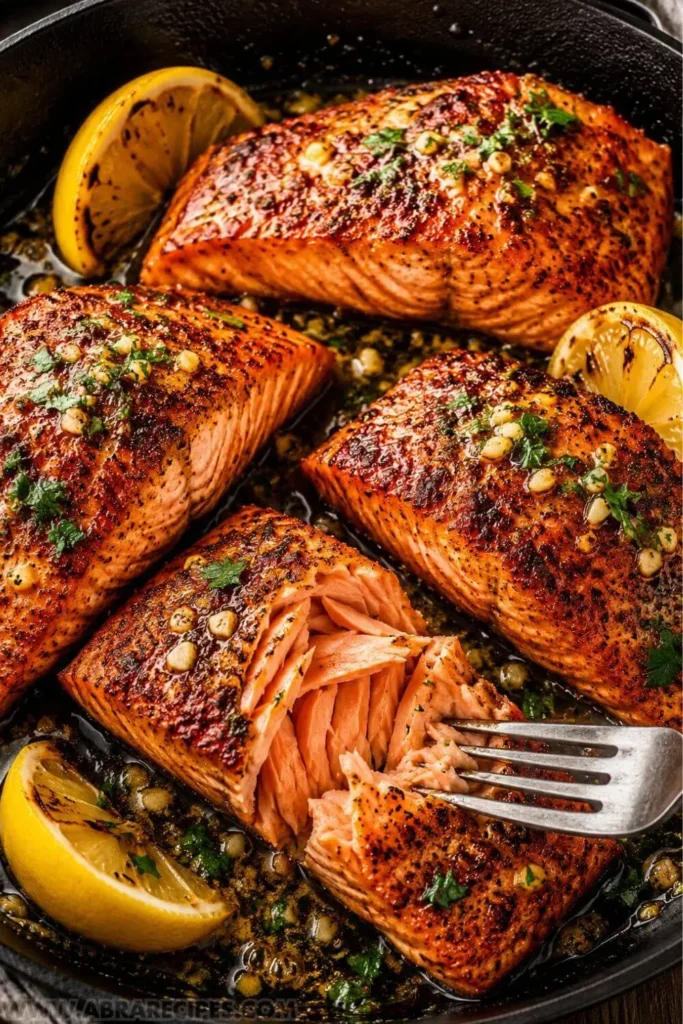
Easy And Delicious Cajun Salmon Recipe
This Cajun Salmon recipe delivers bold, restaurant-quality results in 25 minutes using one skillet and a handful of pantry ingredients.
The combination of a spice-forward crust, juicy wild-caught salmon fillets, and a bright garlic butter pan sauce makes it one of the most satisfying fish dinner recipes you can put on the table any night of the week.
Make it once and you’ll understand why it stays in the regular rotation, that heat, butter, and lemon finish is hard to forget.
Follow me on PINTEREST for all of my latest blog posts, videos, and recipes.
FAQs About Cajun Salmon
Does Cajun go well with salmon?
Yes, Cajun seasoning is an outstanding match for salmon. The bold blend of paprika, garlic powder, cayenne, and herbs cuts through the richness of the fish and creates contrast rather than competing with it. The smoky heat from the spice rub plays against the buttery, flaky texture of the salmon, producing a deeply satisfying balance that makes these cajun salmon recipes so popular for weeknight fish dinner recipes.
How do I make Cajun salmon?
To make Cajun salmon, pat the fillets dry, season with Cajun seasoning, salt, and pepper, then sear in a hot skillet with olive oil for 5 minutes per side. Remove the salmon, build a quick garlic butter pan sauce with chicken broth and lemon juice, then return the fillets to finish cooking for 2-3 minutes while spooning the sauce over them continuously. The full recipe with precise measurements is in the ingredients and instructions sections above.
How to make New Orleans salmon?
New Orleans-style salmon follows the same Cajun technique used in this recipe, bold seasoning, a well-heated cast iron or non-stick skillet, and a rich butter pan sauce. The defining characteristic is using authentic Cajun seasoning with smoked paprika and enough cayenne to feel the heat without it overwhelming the fish. Some versions add a splash of hot sauce to the pan sauce to deepen that Gulf Coast character.
Can I make Cajun salmon in the air fryer?
Cajun salmon air fryer style is a quick and effective method for busy nights. Season the fillets with Cajun seasoning and a light coat of avocado oil, then cook at 400°F (200°C) for 8-10 minutes depending on thickness, flipping halfway through. You won’t get the pan sauce with this method, but the crust is remarkably crisp and the cook time is reduced significantly compared to stovetop searing. Serve with a squeeze of lemon and a side of rice for a complete Cajun salmon and rice dinner.
Can I make Cajun salmon baked in the oven?
Cajun salmon baked in the oven is a hands-off alternative that works very well for meal prep. Season the fillets, place them on a parchment-lined baking sheet, and bake at 400°F (200°C) for 12-15 minutes, depending on the thickness of the fillets. For a richer result, place a pat of garlic butter on top of each fillet before baking, it melts into the fish and creates a similar effect to the pan sauce. This method is also a good entry point into healthy salmon recipes since it requires less added fat.
Can I make creamy Cajun salmon?
Creamy Cajun salmon is made by adding heavy cream to the pan sauce after the broth has reduced. Once the broth and lemon juice are reduced, pour in about ¼ cup of heavy cream, stir well, and let it simmer for 2 minutes before returning the salmon. The result is a velvety, restaurant-quality sauce with a texture similar to what you might find with a honey glazed salmon preparation. Some variations also use a splash of heavy cream along with garlic powder and avocado oil for an even richer finish.