
Smoked beef ribs are the bold, meaty centerpiece of any serious BBQ spread, delivering thick slabs of tender, smoky beef that pull clean off the bone after a long, low-and-slow cook.
This smoked beef ribs recipe uses a simple dry rub, a Dijon mustard binder, and a vinegar-hot sauce spritz to build deep bark and keep every rack juicy from the first hour to the last. Whether you run a Traeger, an offset, or a kettle, these ribs reward patience with extraordinary results.
| Detail | Info |
|---|---|
| Prep Time | 15 minutes |
| Cook Time | 8 hours |
| Resting Time | 1 hour |
| Total Time | 9 hours 15 minutes |
| Servings | 4 people |
| Difficulty | Intermediate |
| Cuisine | American BBQ |
Table of Contents
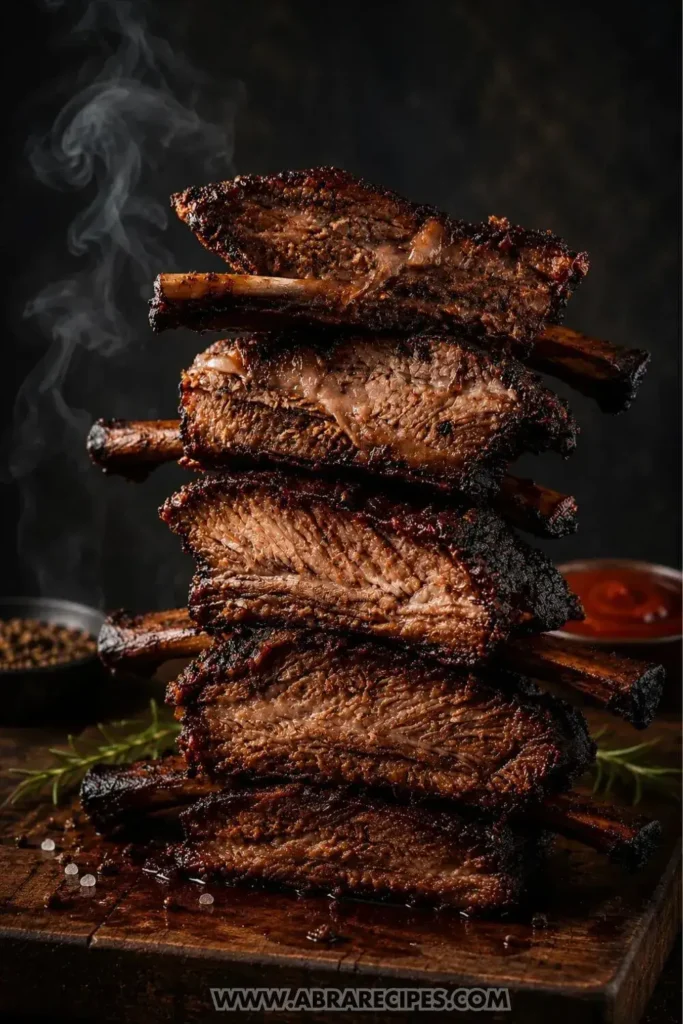
Smoked beef ribs are my absolute go-to when I want to make a real statement at a cookout. Over the years of making this recipe, I have tried every variation imaginable: different wood types, rub ratios, wrap vs. no-wrap, and more spritz blends than I can count.
The version you are about to read is the one I keep coming back to, the one that has consistently drawn the loudest reactions from family and guests alike. The secret is trusting the process, staying off that lid, and letting temperature be your guide rather than the clock.
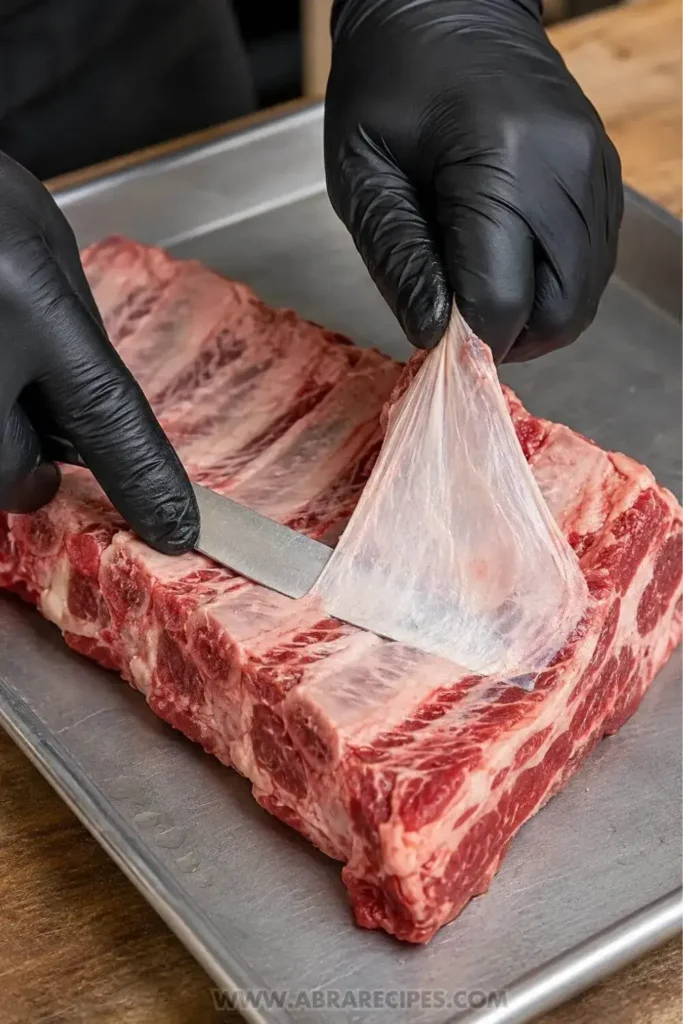
Two practical tips before you even light the smoker. First, always remove the membrane from the bone side of the rack. Slide a butter knife under the edge, grab it with a dry paper towel for grip, and peel it away in one firm pull. Leaving it on blocks smoke penetration and turns rubbery when cooked.
Second, the Dijon mustard binder is not just a flavor trick. It acts as glue for the dry rub and adds a subtle warmth to the finished bark that plain oil simply cannot match. If you are out of Dijon, a thin layer of yellow mustard works in a pinch, but the horseradish variety genuinely adds something special to these beef back ribs.
Why This Smoked Beef Ribs Recipe Works
The method behind this smoked beef ribs recipe is built on two non-negotiable principles: low temperature and correct internal temp targeting. Cooking at 250 degrees F gives the fat and connective tissue in these thick plate or chuck ribs time to fully render, which is what creates that glossy, pull-apart texture. Rushing the cook by cranking the heat is the fastest way to end up with tough, chewy meat, regardless of how good your seasoning is.
The spritz of white vinegar and hot sauce is equally important for unwrapped ribs like these. Without a foil wrap, the surface of the meat is exposed to dry heat throughout the entire cook. The spritz adds surface moisture every 45 minutes, keeping the outer bark from going too hard while also building up additional layers of flavor. Many of the best beef back ribs recipes rely on this exact technique to get that competition-quality crust.
Finally, a full hour of resting in an insulated cooler is not optional. The carryover process allows juices to redistribute throughout the muscle fibers so that every slice stays moist. Cutting into these ribs immediately after pulling them off the smoker means you lose a significant amount of those hard-earned juices onto the cutting board instead of into your mouth.
Ingredients for the Best Smoked Beef Ribs
This Smoked Beef Ribs ingredient list is intentionally short. Great smoked meat recipes succeed through technique and quality of cut, not a long list of spices. Source the best ribs you can find and let the smoke do the heavy lifting.
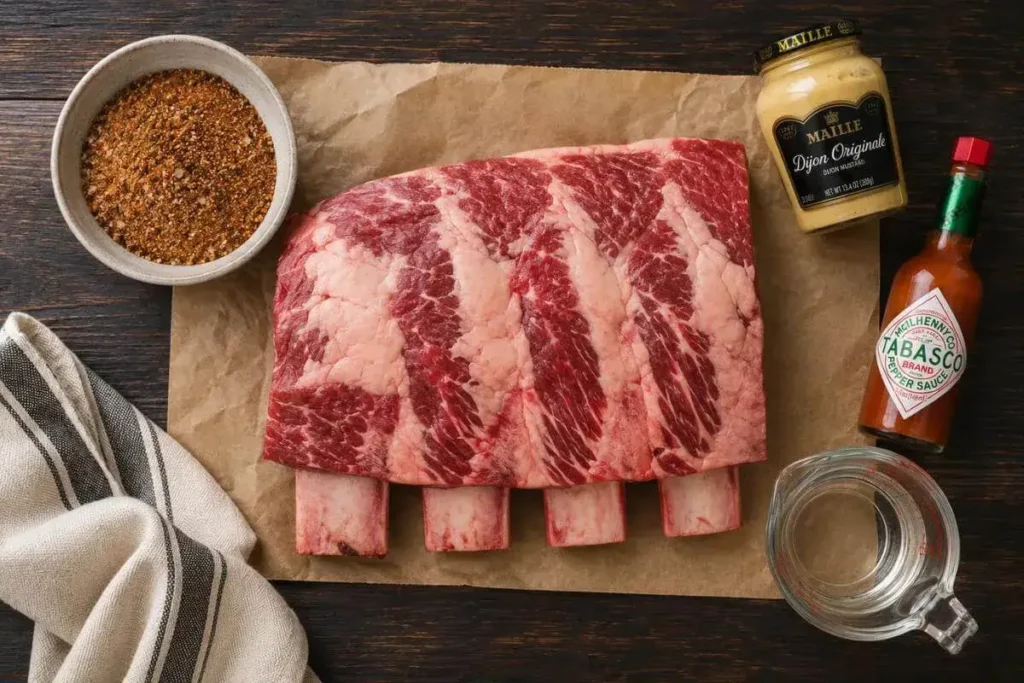
| Ingredient | Quantity | Notes / Alternatives |
|---|---|---|
| Beef ribs (4-bone section) | 4–5 lbs (about 1.8–2.3 kg) | Chuck ribs or plate ribs both work; plate ribs have more meat per bone |
| Dijon mustard with horseradish | 2 tablespoons | Yellow mustard is a decent substitute; horseradish variety adds depth |
| Beef rub (or equal parts kosher salt, coarse black pepper, garlic powder) | 6 tablespoons | Use a commercial beef rub or a simple SPG blend |
| White vinegar (for spritz) | 1 cup | Apple cider vinegar adds a mild sweetness if preferred |
| Hot sauce (for spritz) | 1/4 cup | Any Louisiana-style hot sauce; adjust amount to taste |
Mise en Place and Prep Steps
- Pull the ribs from the refrigerator 30 minutes before seasoning to take the chill off.
- Pat the ribs completely dry with paper towels on all sides.
- Flip the rack bone-side up and locate the thin papery membrane. Slide a butter knife under the edge at one end, grip it with a dry paper towel, and peel it away fully.
- Measure out 6 tablespoons of beef rub into a small bowl and set aside.
- Combine 1 cup white vinegar and 1/4 cup hot sauce in a food-safe spray bottle; shake to mix.
- Preheat your smoker to 250 degrees F using oak or hickory wood for the best smoke flavor.
- Insert a meat thermometer probe into the thickest part of the meat, making sure it does not touch the bone, and set the alarm for 203 degrees F.
How To Make Smoked Beef Ribs Step by Step
Step 1: Season the Ribs
- Slather the entire surface of the ribs with Dijon mustard, covering all sides evenly.
- Season liberally on all sides with the beef rub, pressing lightly to help it adhere to the mustard.
- Let the seasoned rack sit at room temperature for 15 minutes while the smoker finishes preheating.
Step 2: Smoke the Ribs
- Place the seasoned ribs bone-side down on the smoker grate.
- Close the lid and smoke undisturbed for 3 hours to let the bark set.
- After 3 hours, begin spritzing the ribs every 45 minutes to 1 hour with the vinegar and hot sauce blend.
- Continue smoking, maintaining 250 degrees F, until the internal temperature reaches 203 degrees F. This typically takes 8 to 10 hours total.
Step 3: Rest and Serve
- Remove the ribs from the smoker once they hit 203 degrees F.
- Wrap the rack tightly in butcher paper, unwaxed parchment paper, or foil.
- Place the wrapped ribs in an insulated cooler, cover with a towel, and rest for a full hour.
- Slice between the bones into individual ribs and serve immediately.
Smoked Beef Ribs
- Total Time: 9 hours 15 minutes
- Yield: 4 servings 1x
Description
Smoked beef ribs are a bold, fall-off-the-bone BBQ classic cooked low and slow at 250°F to a perfect 203°F internal temperature. A simple Dijon mustard binder, a salt-pepper-garlic rub, and a vinegar-hot sauce spritz build deep bark and keep every rack juicy throughout the 8-10 hour cook.
Ingredients
- 1 4-bone section beef ribs (about 4–5 pounds; chuck ribs or plate ribs)
- 2 tablespoons Dijon mustard with horseradish
- 6 tablespoons beef rub (or equal parts kosher salt, coarse black pepper, and garlic powder)
- 1 cup white vinegar (for spritz)
- 1/4 cup hot sauce (for spritz)
Instructions
- Preheat the Smoker: Preheat your smoker to 250 degrees F for indirect cooking using oak or hickory wood.
- Remove the Membrane: Flip ribs bone-side up. Slide a butter knife under the papery membrane at one end, grip with a dry paper towel, and peel it away completely.
- Season the Ribs: Slather all sides with Dijon mustard, then season liberally with beef rub, pressing lightly to adhere.
- Initial Smoke: Place ribs on the smoker with a probe thermometer in the thickest part of meat (not touching bone). Close lid and smoke undisturbed for 3 hours.
- Spritz and Continue Smoking: Combine vinegar and hot sauce in a spray bottle. After 3 hours, spritz the ribs every 45–60 minutes. Continue smoking until internal temperature reaches 203 degrees F (8–10 hours total).
- Rest and Serve: Wrap in butcher paper or foil, place in an insulated cooler covered with a towel, and rest for 1 hour. Slice between bones and serve.
Notes
Always cook to 203 degrees F internal temperature rather than by time alone, every rack is different. Do not open the smoker lid during the first 3 hours. Spritz lightly; do not soak the bark. Rest a full hour in a cooler before slicing, this step is not optional.
- Prep Time: 15 minutes
- Cook Time: 8 hours
- Category: Main Dish
- Method: Smoking
- Cuisine: American BBQ
Nutrition
- Serving Size: 1 bone (approx. 5 oz cooked)
- Calories: 480
- Sugar: 1g
- Sodium: 720mg
- Fat: 34g
- Saturated Fat: 14g
- Unsaturated Fat: 18g
- Trans Fat: 0g
- Carbohydrates: 9g
- Fiber: 2g
- Protein: 38g
- Cholesterol: 115mg
Keywords: smoked beef ribs, smoked beef ribs recipe, beef back ribs, smoked meat recipes, Traeger smoked ribs beef, how long to smoke beef ribs at 250
Chef Tips for Perfect Smoked Beef Ribs
- Choose the right wood: Oak is the gold standard for smoked beef ribs because it produces a clean, medium-strength smoke that complements beef without overpowering it. Hickory is a close second. Avoid fruit woods for this cut; they are better suited to lighter proteins.
- Go by temperature, not time: Every rack is different. A thermometer set to 203 degrees F is the only reliable way to know your ribs are ready. This is the point where collagen converts to gelatin and the meat reaches that fall-off-the-bone texture.
- Do not open the lid in the first 3 hours: Every time you open the smoker, you lose heat and smoke. Let the ribs build their bark undisturbed for the initial phase.
- Spritz, do not soak: A light, even mist every 45 to 60 minutes is what you want. Soaking the bark will prevent it from forming properly and can make the exterior gummy instead of firm.
- Rest at least one full hour: An hour in a wrapped, insulated cooler is the minimum. The ribs will hold temperature safely for up to two hours this way, which is useful if you are timing a meal for guests.
- Ask your butcher: Skip the pre-packaged case and ask for a 4-bone section of chuck ribs or plate ribs specifically. Butchers can often trim the membrane for you and cut the rack to size if needed, which saves time at home.
Common Mistakes to Avoid For Best Smoked Beef Ribs
| Mistake | Why It Happens | How to Fix It |
|---|---|---|
| Skipping membrane removal | The membrane is thin and easy to overlook on raw ribs | Always flip the rack bone-side up and check for the papery layer before seasoning. Remove it with a butter knife and paper towel. |
| Cooking too hot | Impatience is the main culprit; some pitmasters try 300+ degrees F to save time | Hold 250 degrees F. Higher temps tighten the muscle fibers before collagen breaks down, producing tough, chewy meat. |
| Cutting before resting | The ribs look and smell done at 203 degrees F and it is tempting to slice immediately | Wrap and rest in a cooler for at least 60 minutes. The internal juices need time to redistribute. |
| Using too much wood | More smoke is not always better, especially for a long cook | Add wood chunks at the start and a couple more times in the first two hours. Over-smoking produces a bitter, acrid bark. |
| Ignoring internal temperature stalls | Beef ribs often stall around 160–170 degrees F as moisture evaporates from the surface | Trust the process and maintain consistent smoker temp. The stall can last 1 to 2 hours before the temperature climbs again. Do not raise the heat. |
Variations and Substitutions
| Ingredient | Substitution | Impact on Flavor |
|---|---|---|
| Dijon mustard with horseradish | Yellow mustard or plain Dijon | Slightly milder binder with less background heat; bark integrity remains the same |
| White vinegar (spritz) | Apple cider vinegar | Adds a subtle fruity sweetness to the bark without changing texture |
| Hot sauce (spritz) | Omit or reduce by half | Less heat on the bark; the ribs become more approachable for heat-sensitive guests |
| Beef rub | Equal parts kosher salt, coarse black pepper, garlic powder | A classic SPG rub is simpler but still produces an excellent crust; slightly less depth than a blended commercial rub |
| Oak or hickory wood | Mesquite (use sparingly) | Mesquite is more intense; use half the amount to avoid an overpowering smoke flavor |
| Chuck ribs | Plate ribs (3-bone section) | Plate ribs carry more meat per bone and are the preferred cut for competition-style smoked ribs; flavor profile is identical |
Serving Suggestions and Pairings
Smoked beef ribs are a statement dish and deserve sides that match their boldness without competing with the smoke. For a classic BBQ spread, pair these ribs with tangy classic coleslaw and a loaded potato salad, both of which cut through the richness of the beef beautifully. A simple baked corn casserole rounds out the plate with a touch of sweetness.
For a full outdoor BBQ menu, start guests off with crispy air fryer wings while the ribs finish their rest in the cooler. The ribs are also outstanding alongside pickled jalapeños, raw white onion, and thick slices of white bread in the traditional Texas BBQ style. Cold sparkling water or a citrusy lemonade pairs well with the smoky, savory profile.
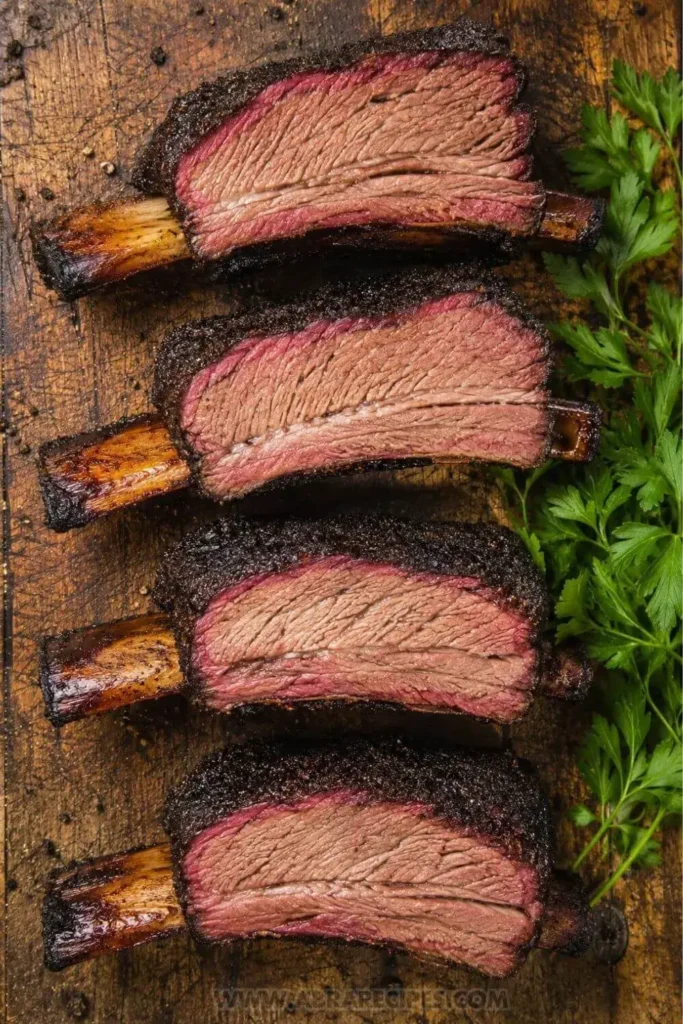
These ribs work equally well for backyard cookouts, Father’s Day celebrations, game-day spreads, or any occasion where the goal is to serve something genuinely impressive. Slice them into individual bones for easy serving, or present the full rack on a wooden board for maximum visual impact.
Storage and Reheating
Smoked beef ribs store well and arguably taste even better the next day once the smoke has fully permeated the meat. Wrap leftover ribs tightly in butcher paper or foil and refrigerate for up to 4 days. For longer storage, vacuum-seal individual portions and freeze for up to 3 months. Thaw overnight in the refrigerator before reheating.
To reheat, wrap the ribs in foil with a tablespoon of beef broth or water and place in a 275-degree oven for 25 to 30 minutes until heated through to at least 165 degrees F. Avoid the microwave, which dries out the meat rapidly and softens the bark. A brief stint back on a 275-degree smoker for 20 to 30 minutes is the best way to restore that fresh-smoked quality if you have time.
Nutritional Information
Approximate values per serving (1 bone, about 5 oz cooked meat). Actual values vary based on specific cut, trimming, and rub quantity used.
| Nutrient | Amount per Serving |
|---|---|
| Calories | ~480 kcal |
| Protein | ~38 g |
| Total Fat | ~34 g |
| Saturated Fat | ~14 g |
| Carbohydrates | ~9 g |
| Fiber | ~2 g |
| Sugar | ~1 g |
| Sodium | ~720 mg |
| Cholesterol | ~115 mg |
| Potassium | ~540 mg |
Ready to Make the Best Smoked Beef Ribs of Your Life?
Smoked beef ribs reward every minute of that low-and-slow cook with layers of deep smoke, a thick, crackled bark, and meat that slides off the bone with almost no effort.
This smoked beef ribs recipe keeps things honest: quality meat, a smart seasoning, and a patient smoke to 203 degrees F.
Set up your smoker, trust the thermometer, and get ready to serve something genuinely unforgettable. That first bite of smoky, juicy beef speaks for itself.
Follow me on PINTEREST for all of my latest blog posts, videos, and recipes.
FAQs About Smoked Beef Ribs Recipe
How long do you smoke beef ribs at 225 degrees F?
At 225 degrees F, smoked beef ribs typically take between 9 and 11 hours to reach the target internal temperature of 203 degrees F. The lower temperature produces a very gradual cook that is forgiving and produces excellent results, though it does add an hour or two compared to the 250-degree method. Always use a meat thermometer as your primary guide rather than relying on time alone, since rack thickness and starting weight vary considerably.
How long to smoke beef ribs at 250 degrees F?
Cooking at 250 degrees F, the standard recommended temperature for this recipe, most racks of beef ribs reach 203 degrees F in 8 to 10 hours. This is the sweet spot for rendering fat and connective tissue without drying out the meat. Plan your cook accordingly, since some racks run faster or slower depending on thickness and fat distribution.
How long to smoke beef ribs at 275 degrees F?
At 275 degrees F, Traeger smoked ribs and other smoked beef ribs recipes can be done in 5 to 7 hours, making it a solid option when time is limited. The higher temperature does slightly reduce the window for bark development and can make the stall shorter, so check the internal temperature more frequently after the 4-hour mark. The end result is still excellent as long as you hit that 203-degree target.
Can I smoke beef ribs in only 3 hours?
Smoking beef ribs in 3 hours is only realistic at a high temperature between 300 and 325 degrees F, and the results will not match the low-and-slow method. You can get to an edible internal temperature faster, but the fat and collagen will not have had adequate time to fully render, leaving the meat tighter and less tender than a full 8-hour cook. Reserve the 3-hour approach for emergencies and use 250 degrees F whenever you have the time.
What is the difference between smoked beef back ribs and plate or chuck ribs?
Smoked beef back ribs come from higher up on the carcass near the spine and typically have less meat directly on top of the bone, with most of the meat between the bones. Plate ribs and chuck ribs sit lower on the animal and carry a thick, even slab of meat on top of each bone, which is what gives them that impressive, brisket-like quality. For the most dramatic results and the most meat per bone, beef short ribs or plate ribs are the superior choice.
Do smoked beef ribs need to be wrapped during cooking?
This recipe does not use a foil or butcher paper wrap during the cook, which is intentional. Leaving the ribs unwrapped throughout the smoke allows the bark to build continuously and produces a firmer, more textured crust on the outside. The regular spritz of vinegar and hot sauce compensates for the moisture that a wrap would otherwise provide. If you prefer a softer bark or want to shorten the cook, wrapping in butcher paper at around 165 degrees F internal temperature is a valid option.