
Lobster Risotto sits right at the crossroads of comfort and elegance. In this article, I’m walking you through the heart of this dish, from its cozy kitchen roots to the small details that make it feel restaurant-worthy at home.
We’ll talk flavor, texture, and technique in a way that feels doable, even on busy nights. If you’re searching for dinner ideas that feel special without being stressful, this guide to Lobster Risotto will help you cook with confidence and intention from the very first stir.
Table of Contents
The Story Behind This Classic Seafood Risotto
A Personal Memory That Made Me Love This Dish
The first time I made this dish, I stood in my kitchen with a pot of homemade lobster stock gently steaming on the stove. Earlier that day, I had cooked a whole lobster and refused to waste a single shell. I sautéed them in olive oil, added onion, bay leaves, and peppercorns, then let everything simmer slowly. That smell filled the house and set the tone for a calm, rewarding night of cooking.
I’m Chef Abra, and at abrarecipes.com, I believe the best dinner recipes begin with care. This experience taught me that thoughtful cooking doesn’t require excess. With arborio rice, butter, and patience, you can create something deeply comforting. Even on lazy dinners, making Lobster Risotto feels soothing rather than demanding. It’s one of those easy dinner ideas that turns an ordinary evening into something memorable.
Why This Risotto Still Belongs on the Dinner Table
This seafood risotto has endured because it relies on method, not trends. The slow addition of warm stock, steady stirring, and a final touch of parmesan build a naturally creamy texture. Well-known approaches, including Lobster risotto Gordon Ramsay–inspired techniques, follow the same rhythm because it consistently delivers balanced flavor.
At home, this recipe fits neatly into modern dinner ideas. It works for relaxed family meals and still feels appropriate for guests. Pairing it with a simple vegetable side like these roasted cabbage steaks keeps the meal light and satisfying. Lobster Risotto encourages you to slow down, focus on the process, and enjoy cooking as much as eating.
Building Flavor the Right Way Without Overthinking Dinner
Choosing the Right Rice and Creating a Rich Base
Creamy rice-based dishes depend on the grain more than anything else. Arborio rice works best because it releases starch gradually during cooking. Carnaroli offers a slightly firmer bite while still delivering a smooth finish.
These short-grain options absorb liquid slowly, which creates that comforting, cohesive texture people expect from a well-made Lobster Risotto. Long-grain white rice won’t produce the same result, even with careful attention.
A deeply flavored base makes a noticeable difference. Simmering shells with onion, bay leaves, and peppercorns creates a savory liquid that carries flavor through every spoonful. This step reduces waste and fits naturally into easy dinner ideas that still feel thoughtful. It also helps keep the final dish rich without relying on heavy additions.
To balance the Lobster Risotto meal, a lighter pairing like lemon ricotta pasta adds freshness without overpowering the main course.
A Simple Cooking Method That Delivers Creaminess
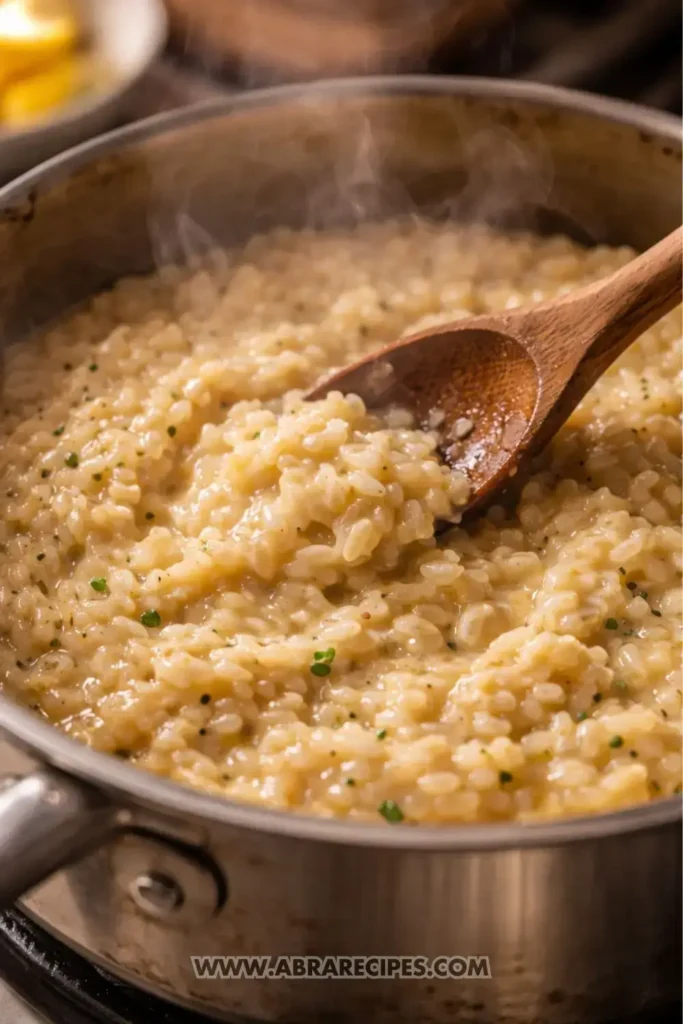
This Lobster Risotto recipe rewards patience rather than speed. Start with olive oil and butter, then cook finely chopped onions until soft and fragrant. Add the rice and stir until every grain looks glossy and evenly coated. From there, warm liquid goes in gradually, one cup at a time. Stir often and allow each addition to absorb fully before adding more. This steady rhythm builds creaminess while keeping the grains intact.
When the rice becomes tender with a slight bite in the center, fold in grated cheese and seasoning. The texture should feel smooth and comforting without becoming heavy. That balance makes this dish suitable for light dinner ideas as well as relaxed family meals. For a simple protein option, sheet pan salmon with asparagus fits naturally and keeps the table feeling complete.
Print
Lobster Risotto Recipe
- Total Time: 45 minutes
- Yield: 4 servings 1x
Description
This Lobster Risotto Recipe is creamy, comforting, and built on classic technique. Made with arborio rice, rich lobster stock, butter, and parmesan, it delivers deep flavor without complicated steps. It’s a perfect choice for a special dinner at home that still feels approachable and satisfying.
Ingredients
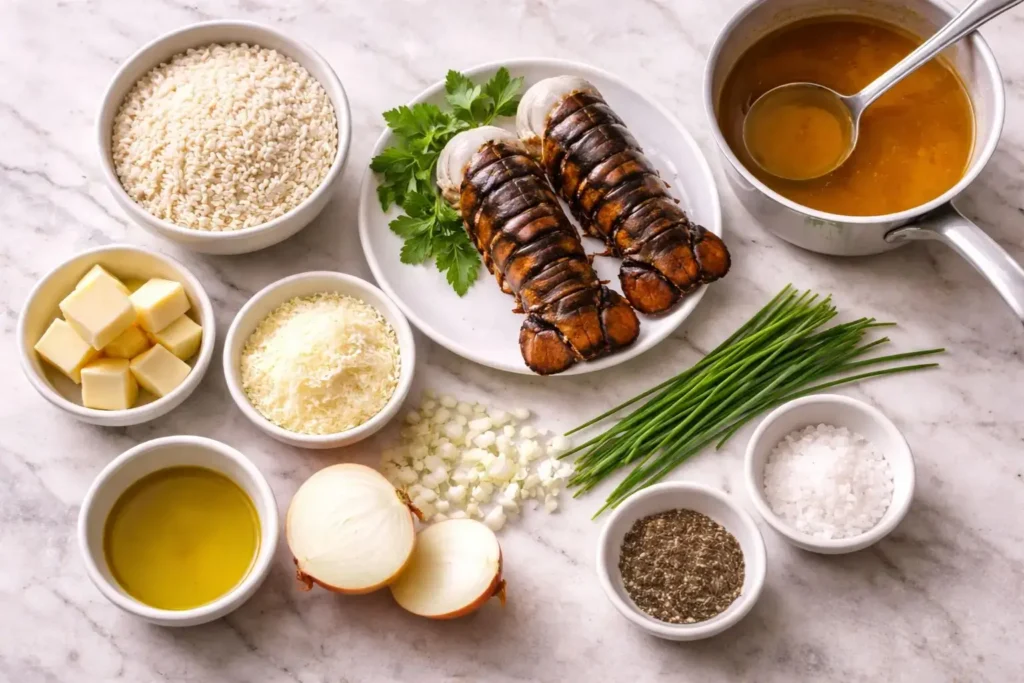
- ¼ cup butter
- ¼ cup extra-virgin olive oil
- 2 medium onions, finely chopped
- Salt, to taste
- 2 cups arborio rice
- About 6 cups warm lobster stock
- Meat from 1 cooked lobster, chopped
- ½ cup freshly grated parmesan
- 2 tablespoons minced chives
- Freshly ground black pepper
Instructions
- Warm the Stock: Heat the lobster stock in a medium pot and keep it warm over low heat.
- Cook the Onions: In a wide saucepan, melt the butter with olive oil over medium heat. Add the onions and cook until soft and translucent, about 4 minutes. Season lightly with salt.
- Add the Rice: Stir in the arborio rice and cook for 1–2 minutes, stirring constantly, until the grains look glossy.
- Begin Adding Stock: Add one cup of warm stock and stir until almost fully absorbed. Continue adding stock one cup at a time, stirring often and waiting until absorbed before adding more.
- Finish the Risotto: After 20–25 minutes, when the rice is tender and creamy, gently fold in the cooked lobster, chives, and half of the parmesan.
- Season and Serve: Season with black pepper and additional salt if needed. Serve immediately with remaining parmesan.
Notes
Keep the stock warm throughout cooking to maintain an even texture. Stir often but not constantly. Add the lobster near the end so it stays tender and flavorful.
- Prep Time: 15 minutes
- Cook Time: 30 minutes
- Category: Main Dish
- Method: Stovetop
- Cuisine: Italian-Inspired
Nutrition
- Serving Size: 1 serving (1/4 of recipe)
- Calories: 510
- Sugar: 3g
- Sodium: 720mg
- Fat: 28g
- Saturated Fat: 14g
- Unsaturated Fat: 12g
- Trans Fat: 0g
- Carbohydrates: 48g
- Fiber: 2g
- Protein: 22g
- Cholesterol: 95mg
Keywords: lobster risotto recipe, creamy risotto, seafood dinner recipe, White rice, lobster stock, olive oil, cooked lobster, black pepper, Lobster tails, arborio rice, chicken broth, parmesan,
Timing, Texture, and Small Choices That Shape Lobster Risotto
When to Add Key Ingredients for the Best Texture
The final minutes of cooking decide whether Lobster Risotto feels smooth or heavy. Timing matters most when adding delicate ingredients. If they go in too early, texture suffers. Waiting until the rice reaches a tender bite allows Lobster Risotto to stay creamy while still feeling light and balanced.
Cheese also needs careful timing. Finely grated parmesan melts best when stirred in over very low heat or just after removing the pan from the burner. This step helps Lobster Risotto stay silky instead of clumpy. A modest amount delivers plenty of flavor when paired with butter and a well-developed base. These small decisions separate average dinner recipes from ones people remember.
For balance on the plate, a simple vegetable side like roasted cabbage steaks adds contrast and keeps the meal from feeling overly rich.
How Heat Control Shapes the Final Dish
Heat control plays a quiet but powerful role in Lobster Risotto. Medium heat allows liquid to absorb gradually while the rice cooks evenly. High heat causes fast evaporation, while low heat can lead to uneven texture. Staying steady helps Lobster Risotto develop its signature creaminess without stress.
Stirring also affects the result. Frequent stirring encourages starch release, but constant motion isn’t necessary. Stir often enough to prevent sticking and to check absorption. This relaxed rhythm makes Lobster Risotto approachable, even on busy nights when easy dinner ideas matter most.
If you’re serving guests or planning ahead, pairing this dish with something simple like sheet pan salmon with asparagus keeps preparation easy while adding balance and color to the table.
Making Lobster Risotto Work for Real Life Dinners
Why You’ll Love This Lobster Risotto
Lobster Risotto works so well because it balances comfort with confidence. It feels special without forcing you into complicated steps. With arborio rice, a rich stock, and a steady cooking rhythm, Lobster Risotto turns simple ingredients into something that feels intentional. You don’t need advanced skills. You just need patience and attention.
This dish fits many dinner moods. It works for cozy nights, relaxed weekends, or moments when you want dinner ideas that feel elevated but still approachable. Even when lobster meat is limited, Lobster Risotto still delivers deep flavor thanks to the stock and creamy texture. That’s why it often appears on restaurant menus and still makes sense at home for easy dinner recipes that don’t feel rushed.
What to Serve With Lobster Risotto
Choosing the right sides helps keep the meal balanced. Because Lobster Risotto already feels rich, lighter pairings work best. Simple roasted vegetables, fresh salads, or crisp greens add contrast without stealing attention. These choices also support light dinner ideas when portions stay reasonable.
If you want something heartier on the table, baked or roasted options pair well. Dishes like roasted cabbage steaks add texture, while something protein-focused like sheet pan salmon with asparagus keeps prep simple. These combinations turn Lobster Risotto into a complete meal without making dinner feel heavy or complicated.
Top Tips for Getting the Best Results
Consistency matters more than speed. Warm stock, steady heat, and regular stirring help Lobster Risotto develop its signature texture. Taste as you go. Adjust seasoning gradually. These small habits make a noticeable difference in the final dish.
Use finely grated parmesan for smooth melting, and add it near the end to keep the texture creamy. A touch of black pepper adds balance without overpowering the flavor. These details help Lobster Risotto feel polished, even on casual family nights.
Storing and Reheating Tips
How to Store
Let leftovers cool fully, then transfer them to an airtight container. Store in the refrigerator for up to two days. The texture will thicken as it rests, which is normal.
How to Reheat
Reheat gently on the stovetop over low heat. Add a small splash of broth or water and stir slowly until creamy again. Avoid high heat, which can dry the rice and change the texture.
Chef Tips & Notes
If you’re cooking for guests, prep the stock ahead of time so the cooking process stays calm. This approach keeps Lobster Risotto enjoyable to make, not stressful. Trust the method, stay patient, and let the dish come together naturally. That’s where the best results always come from.
FAQs About Lobster Risotto
What is in Gordon Ramsay’s lobster risotto?
Gordon Ramsay’s version of Lobster Risotto usually focuses on classic technique and clean flavors. It typically includes arborio rice, lobster stock made from shells, butter, olive oil, onion or shallots, parmesan, and cooked lobster added near the end. The emphasis stays on texture and balance rather than heavy additions, which keeps the dish creamy but not overwhelming.
What should you put in lobster risotto?
At its core, Lobster Risotto needs arborio rice, a well-made stock, butter, olive oil, onion, and parmesan. Cooked lobster goes in toward the end, so it stays tender. Black pepper and salt bring balance, while chives or fresh herbs add a light finish. Keeping the ingredient list focused helps the flavors stay clear and refined.
What goes well with lobster risotto?
Because Lobster Risotto feels rich, lighter sides work best. Roasted vegetables, simple salads, or crisp greens add contrast. Bread with a clean, mild flavor also works well. If you want another protein on the table, something simply cooked pairs better than heavily seasoned dishes.
What is the secret to good risotto?
The secret is patience and heat control. Warm stock, gradual additions, and steady stirring help the rice release starch slowly. Avoid rushing or adding too much liquid at once. Tasting as you cook and adjusting seasoning along the way makes a bigger difference than any single ingredient.
Follow me on PINTEREST for all of my latest blog posts, videos, and recipes.
The Best Lobster Risotto Recipe
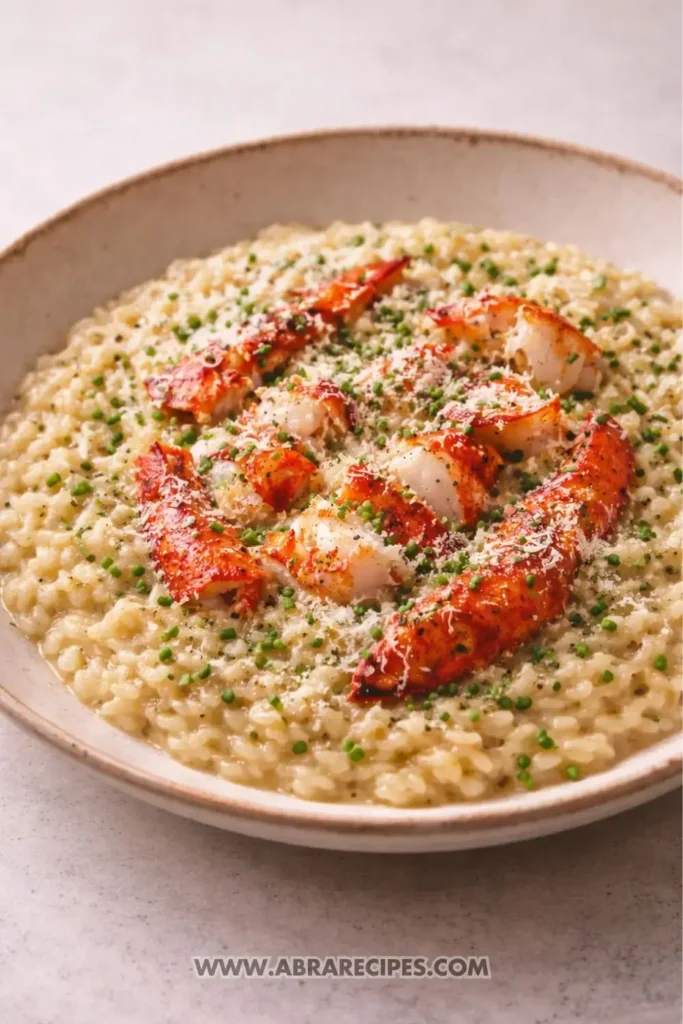
Lobster Risotto proves that great cooking isn’t about complexity, but about care and timing. With a simple ingredient list, steady heat, and patience, this dish delivers a creamy, comforting result that feels both special and approachable.
Whether you’re cooking for guests or planning a quiet family dinner, the method stays the same, and the reward always feels worth it. By focusing on texture, balance, and smart preparation, you can turn an expensive ingredient into a meal that truly lasts.
This is the kind of recipe that invites you to slow down, trust the process, and enjoy every bite from the first stir to the last spoonful.