
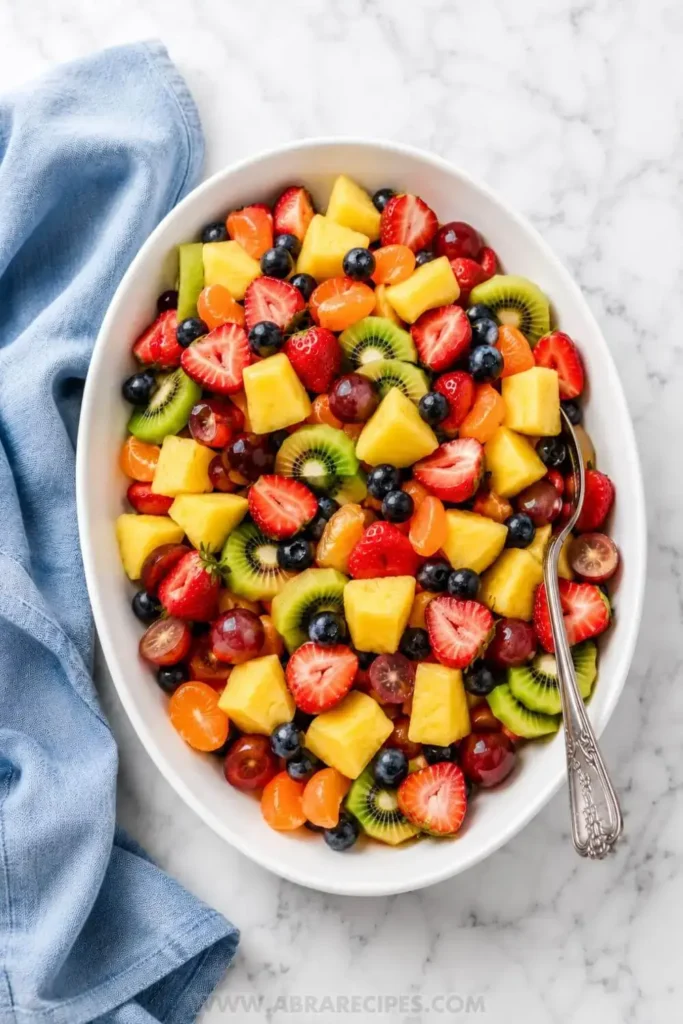
This fruit salad recipe is a no-cook, 30-minute side dish that works for any occasion, from summer cookouts to holiday brunches.
Packed with pineapple, strawberries, kiwi, blueberries, and grapes, then finished with a honey-lime dressing that keeps every bite tasting fresh and bright, this is the kind of salad that disappears fast from any table.
Recipe Overview
| Detail | Info |
|---|---|
| Prep Time | 30 minutes |
| Cook Time | 0 minutes |
| Total Time | 30 minutes |
| Servings | 12 |
| Difficulty | Easy |
| Cuisine | American |
Table of Contents
Why This Fruit Salad Recipe Works
The first thing that sets this fresh fruit salad recipe apart is the dressing. Most fruit salads skip it entirely and rely on the natural juice of the fruit, which means the whole bowl turns watery within an hour.
The honey-lime dressing here acts as a light glaze that coats every piece without weighing it down, keeping flavors bright from the first serving to the last.
I make this chopped fruit salad throughout the summer because the ratio of fruit is genuinely balanced. Pineapple brings acidity and body, blueberries add a pop of color and earthy sweetness, and the kiwi gives a slight tartness that cuts through the honey.
Every bite delivers contrast rather than a one-note sweetness that gets tiring after the third spoonful. If you enjoy building salads with bold, well-thought-out flavor profiles, you might also love this cranberry fluff salad recipe as a companion dish for cooler months.
What I appreciate most about this easy fruit salad is how flexible it is without falling apart as a recipe. Swap the mandarin oranges for ripe mango or chopped peaches mid-summer, and the dressing still works perfectly.
The lime juice also slows oxidation, which means cut fruit holds its color and texture far longer than it would in a plain fruit salad with no acid. That alone makes it worth the extra two minutes of whisking.
Ingredients for This Fresh Fruit Salad Recipe
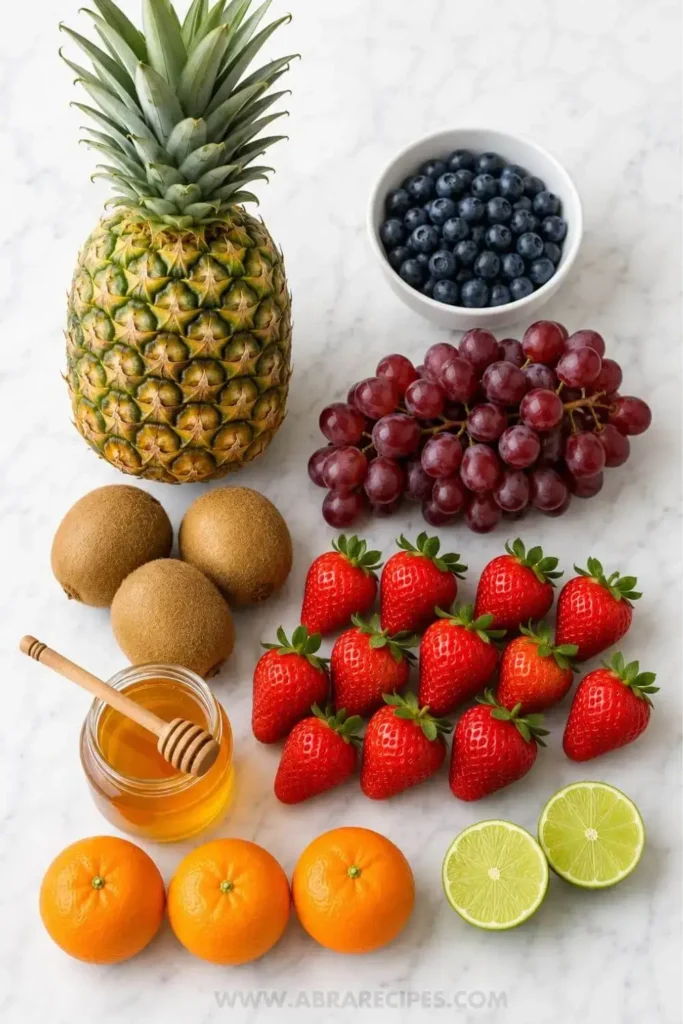
Every ingredient in this fruit salad serves a specific purpose, whether for texture, color, or flavor balance. The table below lists each one with quantity and notes on the best alternatives to keep your salad tasting its best regardless of what is in season.
| Ingredient | Quantity | Notes and Alternatives |
|---|---|---|
| Pineapple | 1 medium (about 5 cups chopped) | Fresh is strongly preferred. Canned works in winter but drain thoroughly to avoid a watery salad. |
| Strawberries | 1 pound, hulled and chopped | Choose firm, deep-red berries. Raspberries work as a substitute but add faster. |
| Kiwi | 3, peeled, quartered, and sliced | Gold kiwi is sweeter and less tart. Green kiwi adds a pleasant sharpness. |
| Seedless Grapes | 2 cups, halved | Red or green both work. Halving prevents them from rolling and makes eating easier. |
| Blueberries | 1 pint | No prep needed. Blackberries are a good swap with a slightly bolder flavor. |
| Mandarin Oranges | 3, peeled and segmented | Sub with 1 peeled mango or 2 chopped peaches in peak summer for a Mexican fruit salad twist. |
| Lime Juice | Juice of 1 lime | Fresh only. Bottled lime juice tastes flat and chemical in comparison. |
| Mandarin Orange Juice | Juice of 1 mandarin | Adds sweetness to the dressing. Orange juice works equally well. |
| Honey or Maple Syrup | 1 tablespoon | Maple syrup makes the recipe fully vegan. Agave nectar is a neutral third option. |
Step-by-Step Instructions
This easy fruit salad comes together in one bowl with no cooking required. Follow each step in order to get the best texture and keep the dressing from soaking in unevenly.
Step 1: Prep the Fruit
- Peel and core the pineapple, then chop it into uniform ½-inch pieces and add them to a large mixing bowl.
- Hull the strawberries and chop them roughly the same size as the pineapple chunks so every bite stays balanced.
- Peel the kiwis, quarter each one lengthwise, then slice crosswise into fan-shaped pieces about ¼-inch thick.
- Halve the grapes lengthwise and add them to the bowl so they absorb dressing on both cut sides.
- Add the blueberries directly from the container after giving them a quick rinse and pat dry.
- Peel the mandarin oranges, separate the segments, and add them to the bowl last to avoid tearing.
Step 2: Make the Honey-Lime Dressing
- Squeeze the lime into a small bowl, removing any seeds with a fork before they fall in.
- Squeeze the juice from one mandarin orange into the same bowl alongside the lime juice.
- Add the honey or maple syrup and whisk vigorously until the mixture is fully combined with no streaks of honey.
Step 3: Dress and Serve
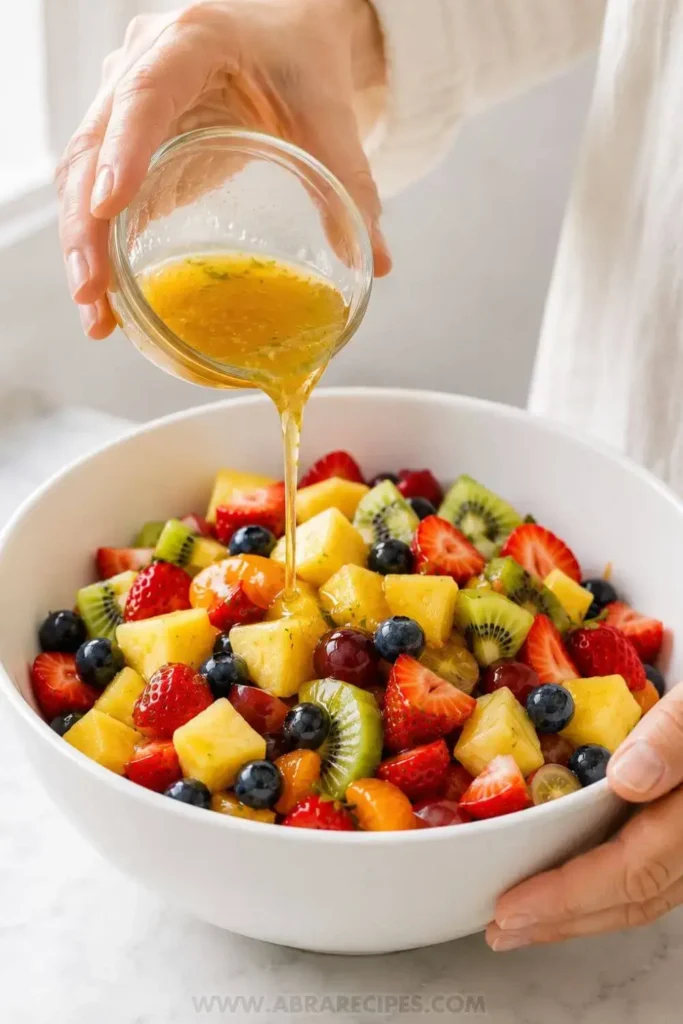
- Pour the dressing evenly over the fruit in a slow circular motion to cover as much surface area as possible.
- Toss the fruit salad gently using two large spoons or a silicone spatula, folding from the bottom up to avoid crushing softer berries.
- Taste and adjust with an extra squeeze of lime if the dressing needs more brightness, or an extra drizzle of honey if the fruit runs tart.
- Serve immediately for the freshest texture, or cover tightly and refrigerate for up to two hours before serving.
Chef Tips for Perfect Results
Getting the details right turns a good fruit salad into one people ask for by name. These tips come directly from making this recipe dozens of times across different seasons and fruit availability.
- Cut everything to a similar size. Aim for ½-inch pieces across all fruit. Uniform cuts mean the dressing coats every piece evenly and each spoonful delivers a mix of fruit rather than one dominant piece.
- Dry the fruit after washing. Pat blueberries, strawberries, and grapes dry before adding them to the bowl. Excess water dilutes the dressing and makes the whole salad watery within 20 minutes.
- Use room-temperature citrus for more juice. Roll the lime firmly on the counter for 10 seconds before cutting, then microwave it for 8 seconds. You will get nearly double the juice compared to a cold, straight-from-the-fridge lime.
- Add kiwi last if making ahead. Kiwi contains actinidin, an enzyme that breaks down proteins in nearby fruit and accelerates softening. Stirring it in right before serving keeps everything firmer longer.
- Chill the bowl before assembling. Place the large mixing bowl in the refrigerator for 15 minutes before you start chopping. A cold bowl slows down oxidation and keeps the fruit looking fresh significantly longer at room temperature.
- Taste the dressing before pouring. Fruit sweetness varies dramatically by season. A February pineapple is far less sweet than a July one, so always taste and balance the dressing before it goes over the fruit.
Common Mistakes to Avoid
Even a simple fruit salad recipe has a few tripping points that change the final result significantly. These are the most frequent mistakes and exactly how to correct them.
| Mistake | Why It Happens | How to Fix It |
|---|---|---|
| Using unripe fruit | Unripe pineapple and kiwi taste sharply acidic and never soften properly once cut. | Check pineapple by pulling a center leaf; if it releases with light pressure, the fruit is ripe. Kiwi should yield gently when pressed. |
| Skipping the dressing | Without acid, cut fruit browns faster and the salad tastes flat after 30 minutes. | Always add the lime and honey dressing, even a minimal amount. The acid prevents browning and ties the flavors together. |
| Making it too far ahead | Strawberries and kiwi release liquid over time, turning the salad into a fruit soup. | Assemble no more than 2 hours before serving. Store the dressing separately if preparing the fruit more than 4 hours in advance. |
| Overcrowding the bowl | A bowl that is too small causes the fruit to crush and release juice during tossing. | Use a bowl at least 1.5 times the volume of the fruit. A large mixing bowl rather than a serving bowl works best for tossing. |
| Using bottled citrus juice | Bottled lime juice contains preservatives that add a metallic, artificial note to the dressing. | Squeeze fresh lime and orange every time, even when fresh citrus feels like extra effort. The flavor difference is significant. |
Variations and Substitutions
This fruit salad recipe adapts to the season and your pantry without losing its core appeal. Below are the most reliable swaps, each tested for flavor impact.
| Ingredient | Substitution | Impact on Flavor |
|---|---|---|
| Mandarin Oranges | Ripe mango or chopped peaches | Mango adds a tropical richness; peaches bring a floral sweetness closer to a classic Mexican fruit salad style. |
| Honey | Maple syrup or agave nectar | Maple syrup adds a subtle caramel note; agave is nearly neutral and keeps the citrus flavors front and center. |
| Lime Juice | Lemon juice or orange juice | Lemon juice is more tart and slightly floral; orange juice makes the dressing sweeter and less sharp. |
| Blueberries | Blackberries or pomegranate seeds | Blackberries add a wine-like depth; pomegranate seeds add crunch and a more complex tartness. |
| Kiwi | Green melon or starfruit | Melon softens the acidity and makes the salad milder; starfruit is a striking visual substitute with a light, tropical flavor. |
| Fresh Pineapple | Well-drained canned pineapple | Slightly less acidic and a bit softer, but perfectly acceptable in winter when fresh pineapple is expensive or underripe. |
For a fruit salad with vanilla pudding variation, fold two tablespoons of instant vanilla pudding powder directly into the dressing before pouring. It thickens the coating, adds a creamy richness without dairy, and makes the salad taste like a classic church potluck dessert. This version holds up particularly well in the refrigerator overnight.
Serving Suggestions and Pairings
This fruit salad fits naturally into a wide range of menus and serves double duty as both a side dish and a light dessert depending on the occasion.
Summer cookout spread: Pair this fresh fruit salad recipe alongside a classic potato salad and grilled chicken for a complete backyard menu. The bright citrus dressing cuts through the richness of grilled meats and heavier sides without feeling out of place next to savory dishes.
Brunch table: Serve the fruit salad in a large shallow bowl at the center of a brunch spread with a croissant breakfast casserole and freshly squeezed orange juice. The color contrast makes the table look assembled by design rather than effort.
Potluck and holiday side: This chopped fruit salad travels well in an airtight container and requires no reheating, which makes it one of the most practical dishes to bring to a gathering. Pair it with chicken salad with grapes for a light, refreshing lunch-style spread that works for spring and summer parties equally well.
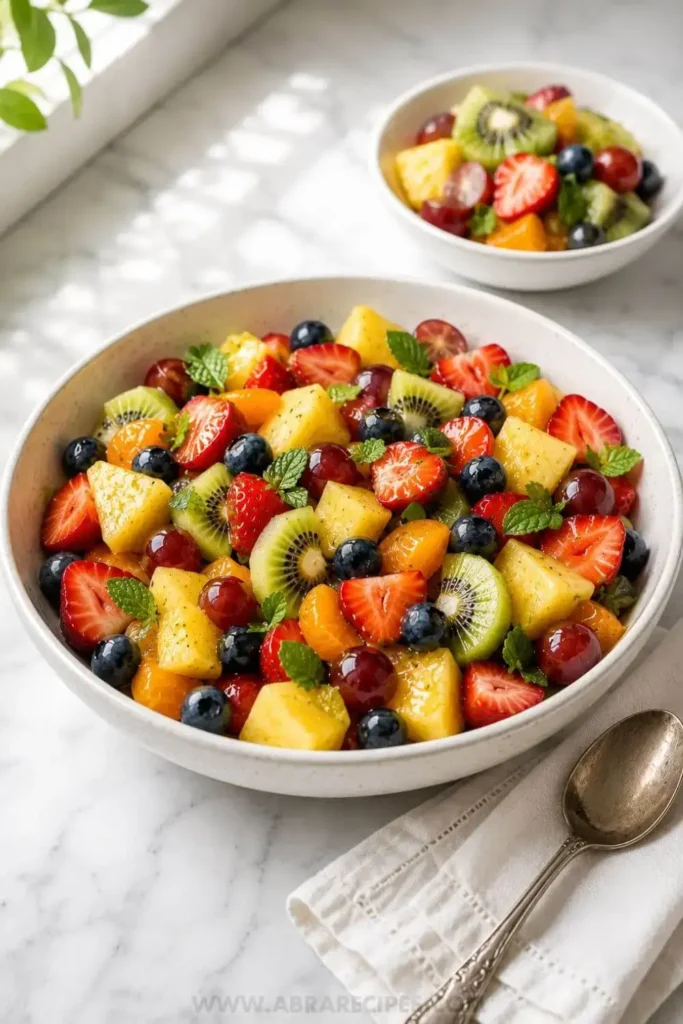
Light dessert: Spoon the salad into individual glasses and top with a small scoop of vanilla Greek yogurt or a few torn mint leaves. Served this way, it functions as a guilt-free dessert that satisfies sweet cravings without any baking required.
Kids’ lunch boxes: Pack smaller portions into leak-proof containers for school lunches. Children respond well to the variety of colors, and the mild sweetness of the honey dressing makes every fruit approachable, including the kiwi which can otherwise feel unfamiliar to younger eaters.
Easy Fruit Salad: Storage and Reheating
Fruit salad does not reheat, but it does store well for short periods when handled correctly from the start.
Refrigerator storage: Transfer leftovers into an airtight glass or BPA-free plastic container immediately after serving. The fruit salad keeps well for up to 2 days in the refrigerator. By day 2, expect the strawberries to soften and release more liquid into the bowl, which is normal and does not indicate spoilage.
Signs of freshness: The fruit should still hold its shape when pressed lightly with a spoon. If the pieces have become uniformly mushy or the liquid at the bottom of the container smells fermented rather than citrusy, discard the batch and make a fresh one.
Draining before serving leftovers: Pour the salad through a fine mesh strainer for 60 seconds before returning it to a clean bowl. This removes the accumulated juice and makes leftover salad taste significantly fresher on day 2 without any additional effort.
Freezing is not recommended. Freezing breaks down the cell structure of all the fruit in this recipe, resulting in a mushy, watery texture after thawing. Make only what you plan to eat within 48 hours for the best results.
Nutritional Information
Values below are approximate and based on one serving out of 12. Actual values vary depending on the ripeness and exact size of the fruit used.
| Nutrient | Amount per Serving |
|---|---|
| Calories | 110 kcal |
| Carbohydrates | 28g |
| Sugar | 21g |
| Fiber | 3g |
| Protein | 1.5g |
| Fat | 0.5g |
| Sodium | 5mg |
| Vitamin C | Approximately 60% DV |
| Potassium | Approximately 280mg |
Approximate values. Calculated using standard nutrition databases. Values may differ based on specific fruit variety, ripeness, and portion size.
Follow me on PINTEREST for all of my latest blog posts, videos, and recipes.
Fruit Salad Easy
This fruit salad recipe delivers real results with minimal effort: a bowl full of color, natural sweetness, and that bright honey-lime finish that makes people reach for a second spoonful.
Whether you serve it at a summer cookout, a holiday brunch, or a Tuesday lunch, the combination of pineapple, strawberries, kiwi, grapes, and blueberries never fails to impress.
Make it once and it becomes the recipe you bring everywhere. That citrus dressing is the part everyone always asks about.
Print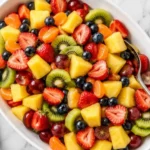
Fruit Salad Recipe
- Total Time: 30 minutes
- Yield: 12 servings 1x
- Diet: Vegan
Description
This Fruit Salad Recipe with Honey-Lime Dressing is a fresh, colorful, no-cook side dish ready in just 30 minutes. Loaded with pineapple, strawberries, kiwi, blueberries, and grapes, then finished with a bright citrus-honey glaze, it is the kind of easy fruit salad that works for summer cookouts, holiday brunches, and everything in between.
Ingredients
- 1 medium pineapple, peeled, cored, and chopped into ½-inch pieces (about 5 cups)
- 1 pound strawberries, hulled and chopped
- 3 kiwis, peeled, quartered lengthwise, and sliced
- 2 cups seedless grapes, halved
- 1 pint blueberries
- 3 mandarin oranges, peeled and segmented (substitute with 1 peeled mango or 2 chopped peaches)
- Juice of 1 lime (fresh only)
- Juice of 1 mandarin orange
- 1 tablespoon honey or maple syrup
Instructions
- Prep the Pineapple: Peel, core, and chop the pineapple into uniform ½-inch pieces and add to a large mixing bowl.
- Prep the Strawberries: Hull and chop strawberries to roughly match the pineapple size, then add to the bowl.
- Prep the Kiwi: Peel each kiwi, quarter lengthwise, and slice crosswise into fan-shaped pieces about ¼-inch thick.
- Add the Remaining Fruit: Halve the grapes, rinse and pat dry the blueberries, segment the mandarins, and add everything to the bowl.
- Make the Dressing: Whisk together lime juice, mandarin juice, and honey in a small bowl until fully combined with no streaks of honey.
- Dress and Toss: Pour the dressing evenly over the fruit in a slow circular motion, then fold gently from the bottom up using a silicone spatula.
- Taste and Serve: Adjust with extra lime or honey as needed. Serve immediately or refrigerate covered for up to 2 hours before serving.
Notes
Cut all fruit to a similar ½-inch size so the dressing coats evenly and every spoonful delivers a mix. Pat fruit dry after washing to prevent a watery salad. Add kiwi last if making ahead, as its natural enzymes accelerate softening in surrounding fruit. For a fruit salad with vanilla pudding variation, whisk 2 tablespoons of dry instant vanilla pudding into the dressing before tossing.
- Prep Time: 30 minutes
- Cook Time: 0 minutes
- Category: Side Dish, Salad
- Method: No-Cook
- Cuisine: American
Nutrition
- Serving Size: 1 serving (1/12th of dish)
- Calories: 110
- Sugar: 21g
- Sodium: 5mg
- Fat: 0.5g
- Saturated Fat: 0g
- Unsaturated Fat: 0.5g
- Trans Fat: 0g
- Carbohydrates: 28g
- Fiber: 3g
- Protein: 1.5g
- Cholesterol: 0mg
Keywords: fruit salad recipe, fresh fruit salad, easy fruit salad, fruit salad dressing, summer salad, chopped fruit salad, fruit salad ideas, Mexican fruit salad, fruit salad with vanilla pudding
FAQs:
These are the most common questions about making, storing, and customizing this fruit salad recipe, each answered directly based on real kitchen testing.
Can I make this fruit salad the night before?
You can prep the fruit up to 8 hours ahead, but store the cut pieces and the dressing in separate containers in the refrigerator. Toss them together 15 minutes before serving. Assembling the full salad the night before makes the strawberries very soft and the overall texture watery by morning. Keeping the components apart is the single most effective way to maintain quality when making it ahead.
What is the best fruit salad dressing to keep it fresh longer?
A honey-lime dressing works better than any store-bought option because the citric acid in lime juice slows oxidation and browning in cut fruit. The honey adds just enough viscosity to coat the pieces rather than pooling at the bottom. Avoid creamy dressings like yogurt or whipped cream if you need the salad to last more than 4 hours, as dairy-based coatings separate and turn watery faster than citrus-based ones.
Can I use frozen fruit in this easy fruit salad?
Frozen fruit works in a limited capacity. Frozen blueberries hold their shape reasonably well after thawing if you drain them thoroughly first. Frozen strawberries, however, become too soft and release so much liquid that they water down the entire bowl. For the best fresh fruit salad recipe result, use fresh seasonal fruit whenever possible and reserve frozen options for smoothies or cooked preparations.
How do I make a Mexican fruit salad version of this recipe?
Swap the mandarin oranges for ripe mango or papaya and add a light sprinkle of Tajin or chili-lime seasoning directly over the assembled salad before serving. The combination of sweet tropical fruit, citrus dressing, and mild heat from the Tajin is the defining characteristic of Mexican fruit salad, and it pairs especially well with the pineapple and lime already present in this base recipe. You can also serve it in a cup with a chamoy drizzle for a street-style presentation. This version works well as a summer snack or light dessert at outdoor gatherings.
What can I add to fruit salad with vanilla pudding to make it more substantial?
Fold two tablespoons of dry instant vanilla pudding powder into the honey-lime dressing before tossing with the fruit. This thickens the coating into a light cream that clings to each piece rather than draining to the bottom. For an even richer version, whisk the pudding powder into half a cup of cold heavy cream first, then fold that mixture into the fruit. The result is closer to a creamy fruit salad dessert than a side dish, and it holds up well overnight in the refrigerator. You can find similar crowd-pleasing salad ideas at this cranberry fluff salad recipe for holiday gatherings.
How long does this fruit salad keep in the refrigerator?
This fruit salad stays good for up to 2 days when stored in an airtight container in the refrigerator. Day 1 is always the best in terms of texture, with the fruit holding its shape and the dressing tasting fresh. By day 2, the salad is still safe to eat but softer, and draining off the accumulated liquid before serving makes a noticeable difference in quality. Beyond 48 hours, the fruit breaks down enough that the texture is no longer enjoyable regardless of how it was stored.