
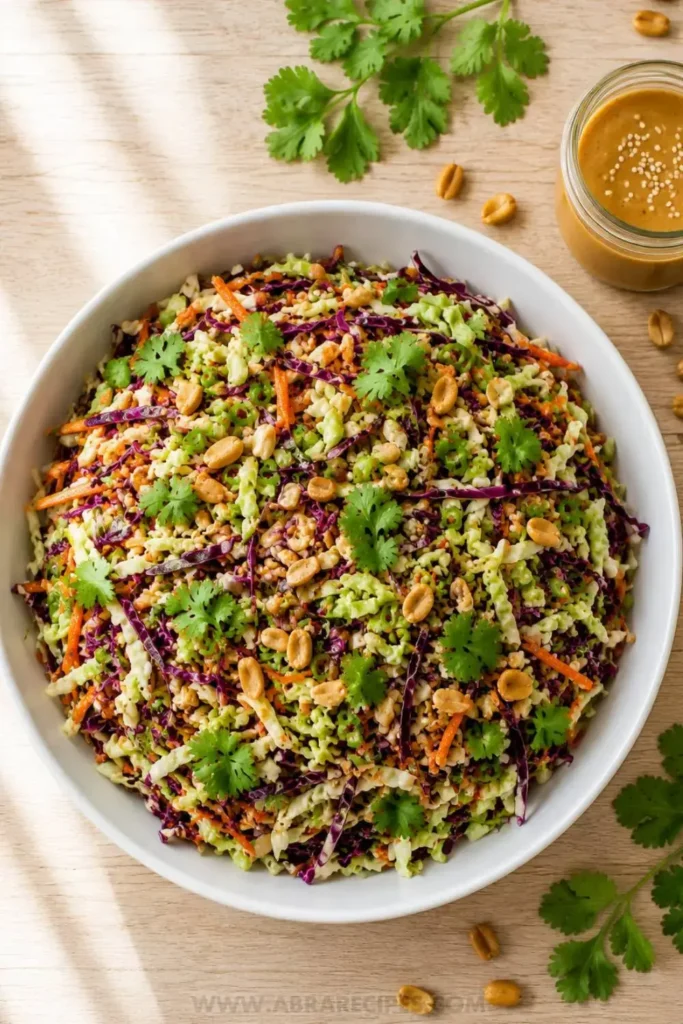
Asian coleslaw is a crunchy, boldly flavored slaw built on shredded cabbage, grated carrots, and toasted peanuts, all brought together by a four-ingredient peanut sesame dressing.
This Asian Coleslaw recipe comes together in 15 minutes flat with zero cooking required beyond a quick pan-toast for the nuts.
Both the dressing and the dry salad components keep well in the fridge for several days, making this one of the most practical side dishes you can add to your weekly rotation.
Recipe Overview
| Prep Time | Cook Time | Total Time | Servings | Difficulty | Cuisine |
|---|---|---|---|---|---|
| 15 minutes | 0 minute | 15 minutes | 6 servings | Easy | American |
Table of Contents
Why This Asian Coleslaw Recipe Works
The first time I made this Asian coleslaw, I was trying to recreate one I had eaten at a local grill alongside an ahi tuna burger. That slaw had a nutty, tangy depth I could not stop thinking about, so I went home and started testing.
What I found is that the combination of toasted sesame oil and seasoned rice vinegar does something remarkable to plain cabbage: it transforms it from a filler vegetable into the star of the plate. The sesame oil is present in a small quantity, just half a teaspoon, but its roasted fragrance punches well above its weight.
Peanut butter in the dressing is the detail that separates this from a generic vinaigrette. It acts as an emulsifier, binding the oil and vinegar into a cohesive, lightly creamy dressing that clings to every strand of cabbage rather than pooling at the bottom of the bowl.
I have tested this dressing with tahini as a substitute and while it works, the peanut version delivers a richer, more complex backdrop that ties the whole salad together. If you enjoy classic coleslaw, this Asian-inspired version gives you the same satisfying crunch with a completely different flavor profile.
The make-ahead factor is a genuine game-changer for busy weeknights. I prep the dressing and the dry salad components up to three days in advance, storing them separately in the fridge. When dinner is ready, I pour the dressing over the slaw and toss. The cabbage stays crisp, the peanuts stay crunchy, and the whole dish tastes as fresh as if I had just made it. For entertaining, this approach means one less thing to worry about when guests arrive.
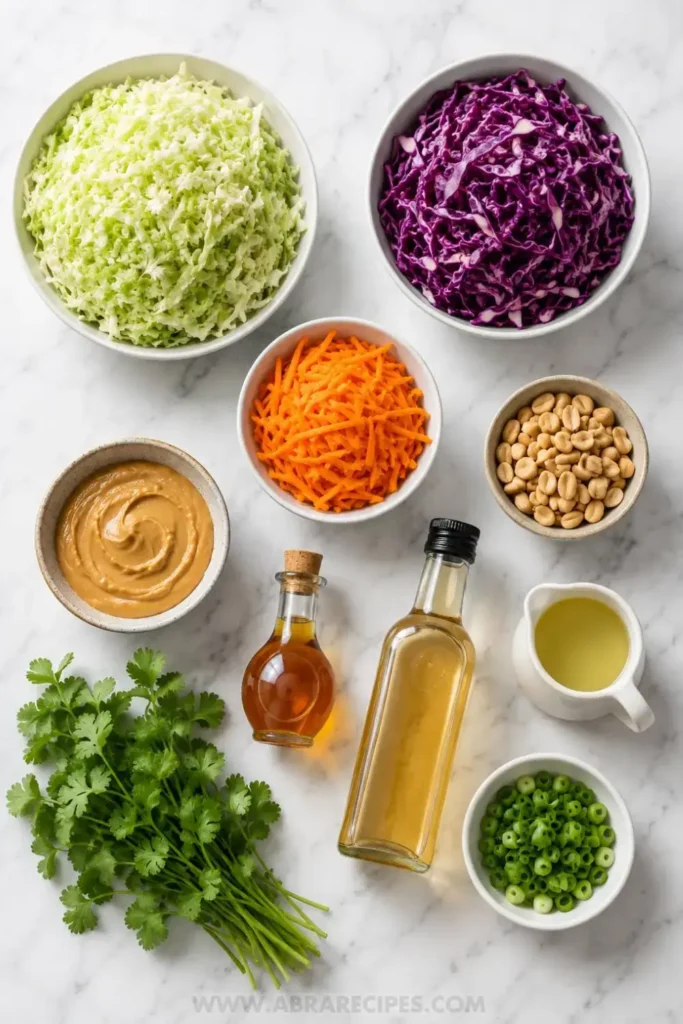
Ingredients
| Ingredient | Quantity | Notes and Alternatives |
|---|---|---|
| Creamy peanut butter | 1 tablespoon | Natural or conventional both work. Sub tahini for a nut-free option. |
| Vegetable oil | 6 tablespoons | Canola, sunflower, or avocado oil all work. Avoid olive oil, the flavor is too assertive. |
| Toasted sesame oil | 1/2 teaspoon | Must be dark/toasted, not light. This is the flavor anchor of the dressing. |
| Seasoned rice vinegar | 4 tablespoons | If using plain rice vinegar, add 1–2 teaspoons of sugar to balance. |
| Cabbage | 8 cups, thinly sliced | Napa, green, purple, or a combination. Napa is softer; green adds maximum crunch. |
| Carrots | 1 cup, grated | Pre-shredded from a bag saves time. Adds color and mild sweetness. |
| Toasted salted peanuts | 1/2 cup | Toast them again even if pre-roasted, double toasting adds depth. Sub toasted sesame seeds for allergy-friendly version. |
| Fresh cilantro (optional) | 1/2 cup, chopped | Adds brightness. Swap with flat-leaf parsley if you dislike cilantro. |
| Green onions or chives (optional) | 2, thinly sliced | Adds mild onion bite. Chives are more delicate. |
The quality of your toasted sesame oil matters more than any other ingredient here. Reach for a reputable brand with a deep, roasted amber color.
Pale or “light” sesame oil is pressed from raw seeds and lacks the signature smoky fragrance that makes this dressing work. Similarly, if you enjoy the vinegar-forward tang in slaws, you might also love our vinegar coleslaw recipe as a companion dish.
How To Make Asian coleslaw Step-by-Step
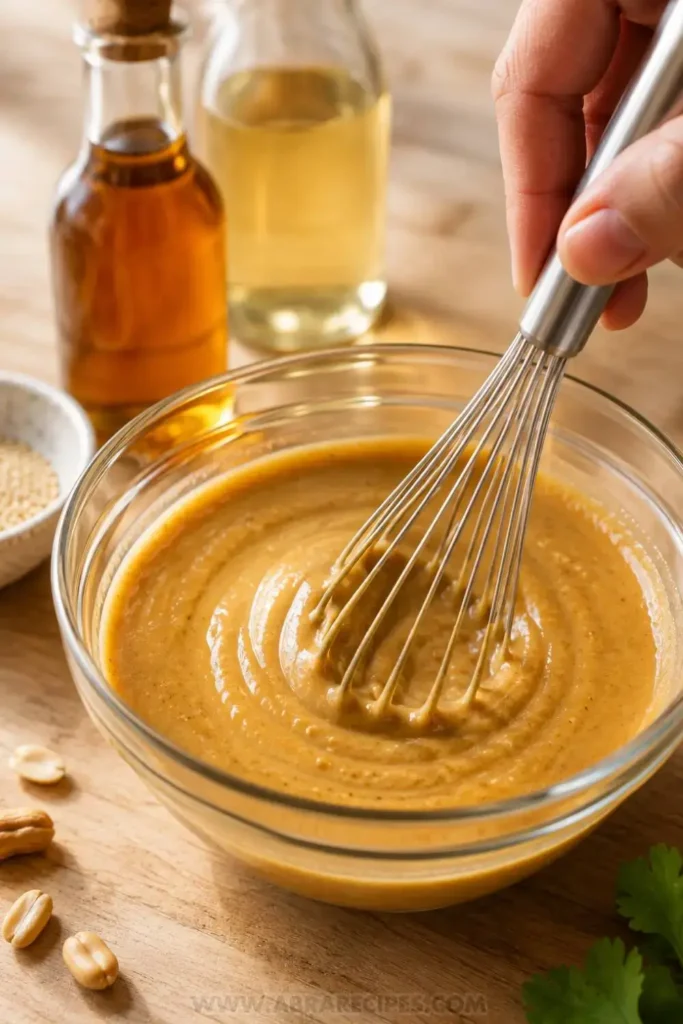
Step 1: Make the Dressing
- Place 1 tablespoon of creamy peanut butter into a medium mixing bowl.
- Add 6 tablespoons of vegetable oil and 1/2 teaspoon of toasted sesame oil.
- Whisk vigorously until the mixture is completely smooth with no visible streaks of peanut butter.
- Pour in 4 tablespoons of seasoned rice vinegar and whisk again to combine fully.
- Taste the dressing. Adjust with a pinch of salt, a small splash more vinegar, or a tiny pinch of sugar depending on your peanut butter’s saltiness and your rice vinegar’s sweetness level.
- Set the dressing aside or refrigerate it in a sealed jar for up to 4 days.
Step 2: Toast the Peanuts
- Place a small dry skillet over medium-high heat and allow it to get fully hot before adding anything.
- Add 1/2 cup of salted peanuts to the dry pan in a single layer.
- Stir constantly with a wooden spoon; the nuts will color and become fragrant within 2–3 minutes.
- Transfer the peanuts immediately to a plate or bowl when they show golden-brown spots and smell toasted. Do not leave them in the pan, they will continue cooking from residual heat and can burn quickly.
Step 3: Assemble the Salad
- Add 8 cups of thinly sliced cabbage to a large serving bowl.
- Add 1 cup of grated carrots and the toasted peanuts.
- Toss in the chopped cilantro and sliced green onions if using.
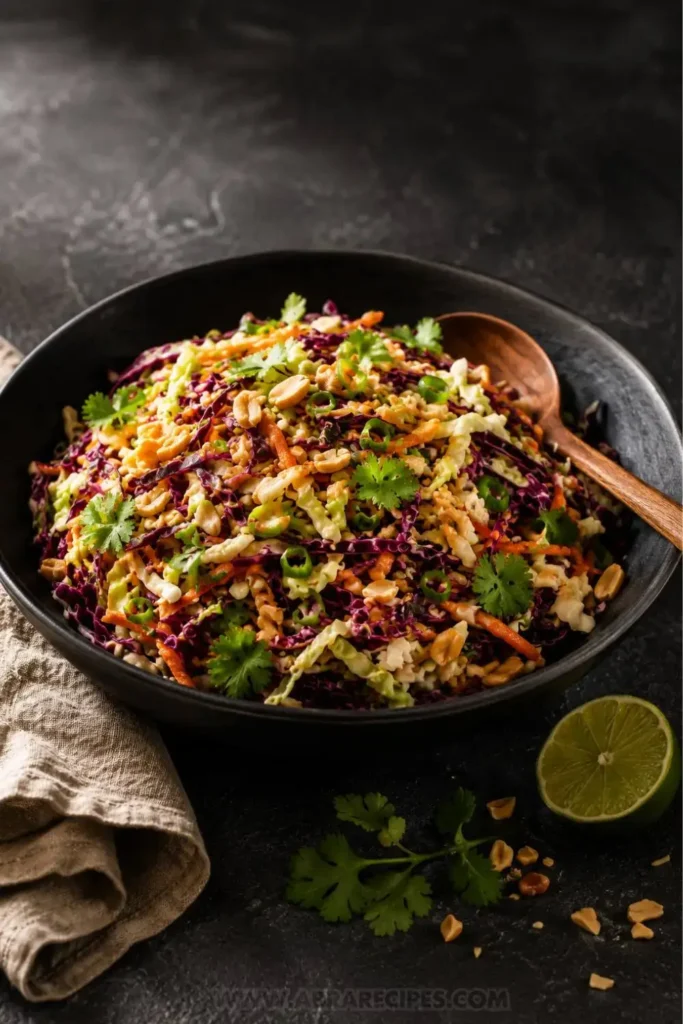
- Right before serving, pour the dressing over the salad and toss thoroughly until every strand is coated.
- Serve immediately for maximum crunch.
Chef Tips for Perfect Asian coleslaw Results
- Slice cabbage paper-thin. Use a sharp chef’s knife or a mandoline set to 1–2mm. Thick, chunky cabbage pieces do not absorb the dressing properly and make each bite feel coarse. A sharp blade keeps the cell walls intact so the cabbage stays crisp longer.
- Dress at the last possible moment. Rice vinegar starts breaking down cabbage cell walls within minutes of contact. Toss the dressing in just before the salad hits the table to preserve the crunch that makes this dish worth making.
- Double-toast the peanuts every single time. Even pre-roasted store-bought peanuts benefit from two to three minutes in a dry skillet. The Maillard reaction activates additional aromatic compounds that raw or single-roasted nuts simply do not have.
- Balance the dressing by taste, not just measurement. Every brand of peanut butter and rice vinegar behaves differently. Start with the listed amounts, taste after whisking, and add vinegar for brightness, sugar for smoothness, or salt to round out flat notes.
- Use a combination of cabbages for visual appeal. A mix of shredded green and purple cabbage turns a simple slaw into something beautiful. The purple cabbage also adds a slightly peppery note that contrasts well with the sweet peanut dressing.
- Refrigerate the components separately when prepping ahead. Store the dressing sealed in a glass jar, keep the dry salad in an airtight container, and combine them only at serving time. This method keeps everything fresh for up to three days.
Follow me on PINTEREST for all of my latest blog posts, videos, and recipes.
Common Mistakes to Avoid
| Mistake | Why It Happens | How to Fix It |
|---|---|---|
| Using light sesame oil instead of toasted | Both bottles look similar on store shelves | Check the label for “toasted” or “dark.” The oil should be deep amber, not pale yellow. The flavor difference is dramatic. |
| Dressing the salad too far in advance | Trying to save time before a party | Dress within 5–10 minutes of serving. Even a 30-minute wait turns a crunchy slaw into a watery, wilted one. |
| Skipping the peanut re-toast | Assuming pre-roasted nuts are ready to use | Spend 3 minutes in a dry pan. The extra toasting adds a smoky depth that makes a noticeable difference in the final flavor. |
| Using regular white vinegar instead of rice vinegar | Grabbing the wrong bottle from the pantry | White vinegar is sharp and harsh in cold applications. Rice vinegar is mellow and slightly sweet, which is what makes the dressing work. Swap immediately. |
| Over-dressing the salad | Adding all the dressing at once without tasting | Add about two-thirds of the dressing first, toss, taste, then add more as needed. Overdressed slaw turns soggy quickly and loses its fresh character. |
Variations and Substitutions
| Ingredient | Substitution | Impact on Flavor |
|---|---|---|
| Peanut butter | Tahini (sesame paste) | Nuttier, more earthy. Slightly less sweet. Good for allergy-friendly versions. |
| Peanut butter | Almond butter | Milder, less assertive. Works well but loses some of the classic peanut character. |
| Salted peanuts | Toasted sesame seeds | Lighter crunch, more subtle nutty flavor. Fully nut-free option. |
| Salted peanuts | Toasted cashews, roughly chopped | Creamier, buttery bite. Pairs beautifully if you also swap the peanut butter for cashew butter. |
| Seasoned rice vinegar | Plain rice vinegar + 1 tsp sugar | Identical result. Seasoned rice vinegar is just pre-sweetened and salted plain rice vinegar. |
| Cilantro | Flat-leaf parsley | Less citrusy and herbal, more neutral. Good for cilantro-averse eaters. |
| Cabbage | Broccoli slaw mix | Slightly more bitter with a heartier chew. Holds up even better overnight. |
For a protein-forward version, add shredded rotisserie chicken and serve it as a full meal. This approach works especially well for lunch. You might also enjoy the way this slaw pairs with other dishes on our site; from air fryer wings to grilled fish.
What Can You Serve With This Coleslaw?
Asian coleslaw works as a side dish across a wide range of meals, not just Asian-themed dinners. Its tangy, nutty dressing and bright crunch make it a natural companion to grilled proteins, fried foods, and anything that benefits from a cool, acidic counterpoint on the plate.
Serve it alongside grilled salmon, shrimp skewers, or fish tacos for a seafood-focused dinner. The slaw’s rice vinegar tang cuts through the richness of fatty fish beautifully. For a backyard cookout, pair it with buffalo chicken sliders or burgers in place of traditional mayonnaise-based coleslaw. The peanut dressing holds its own next to bold, spicy sauces without disappearing.
For a full Asian-inspired spread, serve this slaw alongside kimchi-seasoned dishes, kimchi cauliflower rice, or grilled teriyaki chicken thighs. Add the optional cilantro and green onion garnishes for a restaurant-quality presentation. For weeknight meal prep, build grain bowls using this slaw as the vegetable component alongside quinoa or brown rice and sliced protein.
Occasion pairings:
- Weeknight dinner: Pair with pan-seared salmon and steamed jasmine rice
- Casual cookout: Serve alongside burgers, grilled chicken, or fish tacos
- Potluck or picnic: Bring the dressing separately and toss on-site
- Meal prep lunches: Layer into grain bowls or wrap in rice paper rolls
- Date night: Serve with ahi tuna or sesame-crusted tofu steaks
Asian coleslaw Storage and Reheating
Asian coleslaw does not require reheating, it is served cold. Proper storage is about maintaining crunch rather than managing temperature.
Undressed components: Store the dry salad mix (cabbage, carrots, peanuts) in an airtight container in the refrigerator for up to 3 days. Keep the dressing in a sealed glass jar in the fridge for up to 4 days. Shake or re-whisk the dressing before using as the oil may separate slightly.
Already dressed leftovers: Dressed slaw keeps in a sealed container in the fridge for 1–2 days. Expect some wilting and liquid release from the cabbage. The flavor is still good, but the texture will be softer. If you plan to have leftovers, drain off any accumulated liquid before serving again and add a small handful of fresh cabbage to restore some crunch.
Indicator of freshness: Fresh slaw has audible crunch when you toss it. Once it no longer makes that sound and the leaves look translucent and limp, it is past its prime texture-wise though still safe to eat.
Nutritional Information
Approximate values per serving (based on 6 servings).
| Nutrient | Amount per Serving |
|---|---|
| Calories | 268 kcal |
| Total Fat | 22g (28% DV) |
| Saturated Fat | 3g (17% DV) |
| Cholesterol | 0mg |
| Sodium | 92mg (4% DV) |
| Total Carbohydrates | 16g (6% DV) |
| Dietary Fiber | 6g (20% DV) |
| Total Sugars | 7g |
| Protein | 6g |
| Vitamin C | 77mg (385% DV) |
| Calcium | 115mg (9% DV) |
| Iron | 1mg (4% DV) |
| Potassium | 558mg (12% DV) |
This slaw is naturally cholesterol-free and provides an outstanding amount of Vitamin C – 385% of the daily recommended value per serving, thanks to the raw cabbage. The fats are predominantly unsaturated, coming from vegetable oil and peanuts. The 6g of dietary fiber per serving supports digestive health and contributes to a satisfying, filling side dish.
Print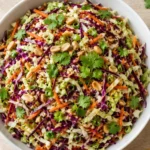
Asian Coleslaw Recipe
- Total Time: 15 minutes
- Yield: 6 servings 1x
Description
This Asian Coleslaw with Peanut Sesame Dressing is a crunchy, boldly flavored slaw that comes together in just 15 minutes. A simple four-ingredient dressing of peanut butter, toasted sesame oil, rice vinegar, and vegetable oil coats every strand of cabbage with nutty, tangy flavor. Both the dressing and dry salad components can be prepped days ahead, making this one of the most practical side dishes for busy weeknights, cookouts, and meal prep.
Ingredients
- 1 tablespoon creamy peanut butter (substitute tahini for nut-free)
- 6 tablespoons vegetable oil (canola or sunflower both work)
- 1/2 teaspoon toasted sesame oil (must be dark/toasted, not light)
- 4 tablespoons seasoned rice vinegar (or plain rice vinegar + 1–2 tsp sugar)
- 8 cups thinly sliced cabbage (napa, green, purple, or a combination)
- 1 cup grated carrots
- 1/2 cup toasted salted peanuts (substitute toasted sesame seeds for allergy-friendly)
- 1/2 cup chopped fresh cilantro, optional (substitute flat-leaf parsley)
- 2 green onions or chives, thinly sliced, optional
Instructions
- Make the Dressing: Place peanut butter in a medium bowl. Add vegetable oil and toasted sesame oil, then whisk until completely smooth with no visible streaks.
- Finish and Taste the Dressing: Whisk in the seasoned rice vinegar. Taste and adjust with a pinch of salt, a splash more vinegar for tang, or a small pinch of sugar for balance. Set aside or refrigerate in a sealed jar for up to 4 days.
- Toast the Peanuts: Heat a small dry skillet over medium-high heat. Add peanuts and stir constantly with a wooden spoon for 2-3 minutes until golden-brown spots appear and you smell toasting aromas.
- Remove and Cool: Transfer peanuts immediately to a plate. Do not leave them in the pan as residual heat will continue cooking them.
- Assemble the Salad: Add sliced cabbage, grated carrots, and toasted peanuts to a large bowl. Toss in cilantro and green onions if using.
- Dress and Serve: Pour dressing over the salad right before serving and toss thoroughly until every strand is coated. Serve immediately for maximum crunch.
Notes
Dress the slaw at the last possible moment, rice vinegar starts breaking down cabbage within minutes of contact. Store the dry salad and dressing separately in the fridge for up to 3 days and combine only at serving time. Double-toast the peanuts even if they are pre-roasted; the extra 3 minutes in a dry skillet adds significant depth. For a protein-forward meal, toss in 2 cups of shredded rotisserie chicken before dressing.
- Prep Time: 15 minutes
- Cook Time: 0 minutes
- Category: Side Dish, Salad
- Method: No-Cook
- Cuisine: Asian-American
Nutrition
- Serving Size: 1 serving (1/6th of dish)
- Calories: 268
- Sugar: 7g
- Sodium: 92mg
- Fat: 22g
- Saturated Fat: 3g
- Unsaturated Fat: 17g
- Trans Fat: 0g
- Carbohydrates: 16g
- Fiber: 6g
- Protein: 6g
- Cholesterol: 0mg
Keywords: asian coleslaw, peanut sesame dressing, easy coleslaw recipe, make-ahead slaw, asian slaw with peanut butter
Best Asian Coleslaw Recipe
Asian coleslaw belongs in your regular side-dish lineup. It takes 15 minutes, uses pantry staples, and makes ahead beautifully.
The peanut sesame dressing is nutty, tangy, and just rich enough to coat every strand of cabbage without weighing it down.
Whether you serve Asian coleslaw next to grilled fish, tuck it into wraps, or bring it to a cookout, this slaw delivers a bright, crunchy, confident flavor that people remember. Make a double batch; you will want the leftovers.
FAQs: Asian coleslaw Recipe
Can I make Asian coleslaw the night before?
Yes, you can prepare the components the night before, but keep the dressing and salad separate until serving. The dry salad mix holds well in an airtight container in the fridge for up to 3 days. Add the dressing only right before you plan to eat. This method gives you all the convenience of make-ahead prep with none of the wilted-cabbage disappointment.
What can I use instead of peanut butter in the dressing?
Tahini is the best direct substitute for peanut butter in this Asian slaw dressing. Use the same quantity (1 tablespoon) and expect a slightly more earthy, bitter flavor profile with less sweetness. Almond butter also works and produces a milder result. If you need to skip nut-based pastes entirely, the dressing still functions with just the oil, sesame oil, and rice vinegar, though it will be thinner and less coating.
Why is my Asian coleslaw watery after sitting?
Cabbage releases water through a process called osmosis when it contacts salt and acid, which is exactly what the rice vinegar in this dressing triggers. Dressing the salad too far in advance is the primary cause of a watery slaw. To fix it, either pour off the accumulated liquid before serving, or drain the dressed slaw through a colander and toss it with a small amount of fresh dressing to revive the flavor.
Is this Asian coleslaw recipe gluten-free?
Asian coleslaw recipe is naturally gluten-free as written, but you should check your specific brand of seasoned rice vinegar. Some commercial seasoned rice vinegars contain trace additives, and a small number of peanut butters are processed in facilities that also handle wheat. Check labels if you are cooking for someone with celiac disease or a serious gluten intolerance. All the core ingredients in their pure form are gluten-free.
Can I add protein to make this a full meal?
Adding shredded rotisserie chicken, pan-seared shrimp, or sliced grilled tofu turns this Asian coleslaw into a complete, satisfying meal. For chicken, toss about 2 cups of shredded meat directly into the slaw before dressing. Shrimp works best placed on top as a garnish after dressing so it stays visible and textually distinct. If you enjoy chicken-based salads, our classic chicken salad recipe offers another great starting point.
How does Asian coleslaw differ from regular coleslaw?
Traditional American coleslaw uses a mayonnaise-based dressing that is rich, creamy, and mildly sweet. Asian coleslaw replaces mayo with a vinaigrette built on rice vinegar and toasted sesame oil, which makes it lighter, tangier, and more aromatic. The addition of toasted peanuts and optional cilantro also shifts the flavor toward the umami-forward, herbaceous profile common in East and Southeast Asian cooking. If you want to explore the full range of slaw styles, our southern coleslaw recipe shows the mayonnaise-based classic at its best.