
Kettle corn is that sweet-meets-salty snack we all crave, especially at fairs and festivals. Light, crisp, and just sugary enough to keep you reaching for more, this popcorn style has earned a spot in American snacking culture. But guess what? You don’t need a carnival to enjoy it.
This guide will show you how to make kettle corn at home with just four simple ingredients and a stovetop. We’ll walk through its origins, explain how it compares to other popcorn varieties, and share tips for customizing your batch with fun flavors.
From cooking techniques to storage advice, this article has everything you need to make the perfect kettle corn, every time.
Looking for other popcorn ideas? Don’t miss our cinnamon sugar popcorn for another sweet and crunchy snack.
Table of Contents
The Origins and Popularity of Kettle Corn
A Brief History of This Sweet and Salty Popcorn Favorite
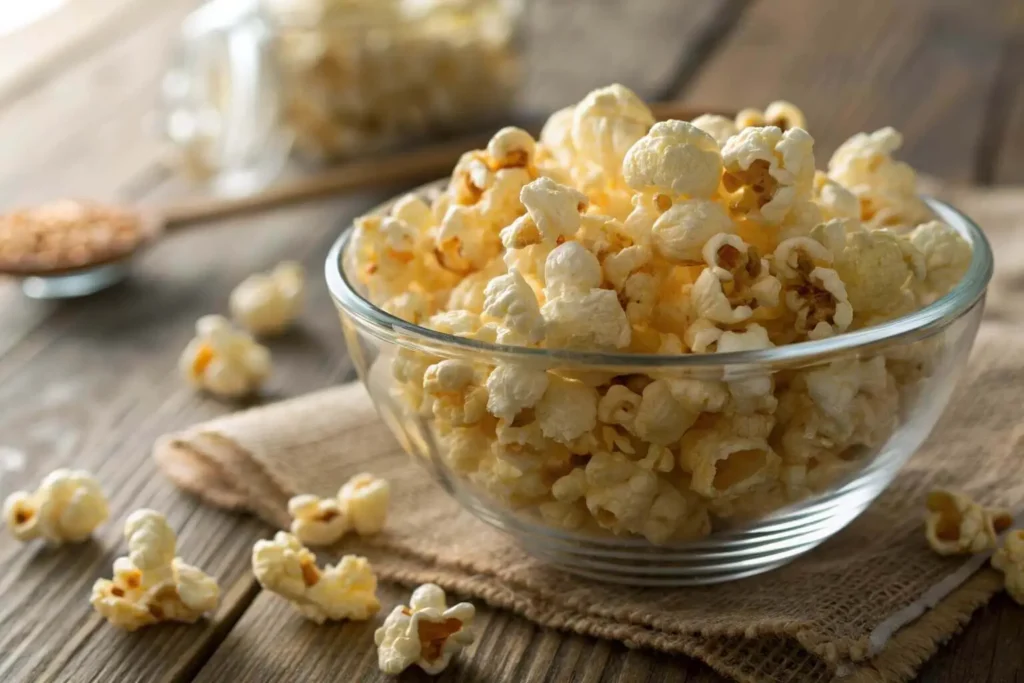
This beloved popcorn snack traces its roots back to the 18th century. Dutch settlers in Pennsylvania were among the first to pop corn in large iron kettles, combining it with lard, sugar, and salt. The result? A crunchy, lightly sweet coating that quickly caught on at country fairs and markets.
While it was once made over open fires in cast iron kettles, the process has remained remarkably simple through the generations. Vendors still make it at outdoor events using oversized metal pans, drawing crowds with its irresistible smell and signature popping sound.
Why This Classic Snack Still Has Staying Power
There’s a reason this popcorn variety is still a go-to treat at festivals and movie nights. It hits the sweet spot, literally, by combining sugar and salt for a perfectly balanced flavor. The crispy texture adds to its charm, delivering a lighter alternative to stickier, denser snacks like caramel corn.
Its simplicity makes it even more appealing. With just a few ingredients and no fancy equipment, anyone can make it at home in minutes.
Plus, it’s vegetarian-friendly and low in calories, making it a popular choice for mindful snackers.
Whether you’re enjoying it warm from a street vendor or fresh off your own stovetop, this classic treat proves that sometimes, the simplest recipes are the ones that stick around for generations.
Print
Kettle Corn Recipe
- Total Time: 7 minutes
- Yield: 4 cups 1x
- Diet: Vegetarian
Description
This easy kettle corn recipe delivers the perfect sweet and salty crunch in just 7 minutes. Made with only four ingredients, it’s a quick stovetop snack that works for movie nights, parties, or edible gifts.
Ingredients
- 1/4 cup popcorn kernels
- 2 tablespoons granulated sugar
- 2 tablespoons vegetable oil (such as canola or sunflower)
- 1/4 teaspoon salt
Instructions
- Heat the Oil: In a large, heavy-bottomed pot with a lid, heat the vegetable oil and 3 test popcorn kernels over medium-high heat.
- Add Kernels and Sugar: Once the test kernels pop, add the remaining popcorn kernels and sugar. Stir quickly to coat.
- Pop and Shake: Cover with the lid and shake the pot gently for 3 seconds, then rest for 3 seconds. Repeat until the popping slows to about 2 seconds between pops.
- Season: Immediately pour the popped corn into a large bowl and sprinkle with salt while still hot.
- Cool and Serve: Let cool slightly before serving to allow the glaze to set, and remove any unpopped kernels.
Notes
Crack the lid slightly while popping to release steam and keep the kettle corn crisp. Store cooled popcorn in an airtight container at room temperature for up to 1 week.
- Prep Time: 2 minutes
- Cook Time: 5 minutes
- Category: Snack
- Method: Stovetop
- Cuisine: American
Nutrition
- Serving Size: 1 cup
- Calories: 110
- Sugar: 4g
- Sodium: 95mg
- Fat: 6g
- Saturated Fat: 1g
- Unsaturated Fat: 4g
- Trans Fat: 0g
- Carbohydrates: 13g
- Fiber: 2g
- Protein: 2g
- Cholesterol: 0mg
Keywords: kettle corn, sweet popcorn, homemade popcorn, stovetop popcorn recipe
What is Kettle Corn, Exactly?
Defining the Snack: What Sets It Apart?
So, what exactly is kettle corn? At its core, it’s a lightly sweetened popcorn made by popping corn kernels in hot oil with sugar and salt.
What makes it distinct from regular popcorn isn’t just the sugar, it’s how the sugar caramelizes slightly during popping, coating each kernel in a delicate glaze that hardens into a satisfying crunch.
Unlike heavily candied popcorn varieties, this treat doesn’t rely on a thick coating or baked finish. Instead, the sweet layer is achieved in real-time while the kernels pop, giving it a more natural texture and an almost nostalgic feel.
It’s also worth noting that this type of popcorn is typically made in wide, shallow kettles (hence the name), though you can recreate the same results on your stovetop at home using a regular pot.
Kettle Corn vs Regular Popcorn: The Key Differences
At first glance, kettle corn and regular popcorn might seem nearly identical, but their taste and preparation tell a different story.
Here’s a quick side-by-side comparison:
| Feature | Kettle Corn | Regular Popcorn |
|---|---|---|
| Flavor Profile | Sweet and salty | Typically salty or buttery |
| Cooking Method | Popped with sugar and salt together | Usually popped, then seasoned |
| Texture | Crunchy, with a light glaze | Fluffy, oil-coated or dry |
| Add-Ins | Often customized with sweet flavors | Commonly seasoned with butter or cheese |
| Occasions | Fairs, parties, DIY snack bags | Movies, game night, casual snacking |
The biggest difference lies in the flavor: kettle corn gives you that balanced bite of sugar and salt in every kernel, whereas regular popcorn is often seasoned after cooking and leans heavily toward savory.
The preparation method is also a big differentiator. When making kettle-style corn, the sugar is added during the popping process, not after, which causes it to melt and coat the kernels evenly without making them soggy.
That’s why it stands out, not just as a snack, but as a sensory experience.
Kettle Corn vs Other Popcorn Varieties
Kettle Corn vs Caramel Corn: Main Differences
While they’re both sweet, kettle corn and caramel corn are two very different snacks when it comes to flavor, texture, and preparation.
Caramel corn is made by coating popped corn in a rich, buttery caramel sauce, usually involving brown sugar, butter, and sometimes corn syrup.
After coating, it’s typically baked to harden the caramel and give it a crunchy, candy-like shell.
The result is a deeply sweet, often sticky treat that feels more like candy than popcorn.
By contrast, kettle corn is made by adding granulated sugar during the popping process, which lightly caramelizes without overwhelming the kernel.
The glaze is thin, crisp, and doesn’t require baking. The flavor is subtler, offering a balance of sweet and salty without the richness or heaviness of caramel corn.
Here’s a quick visual comparison:
| Feature | Kettle Corn | Caramel Corn |
|---|---|---|
| Sweetener | Granulated sugar (added while popping) | Caramel sauce (added after popping) |
| Texture | Light glaze, crisp finish | Thick coating, crunchy and sticky |
| Cooking Method | Popped with sugar | Coated and baked after popping |
| Sweetness Level | Mild to moderate | Very sweet, candy-like |
| Best For | Light snacking, party mixes | Dessert-style treats, holiday tins |
So, if you want a lighter, easier-to-make option with a sweet hint, kettle corn is the way to go. For something more decadent, caramel corn takes the crown.
Kettle Corn vs Butter Popcorn: Taste, Texture, and Health
Now let’s compare kettle corn to the most iconic snack of all: butter popcorn.
Butter popcorn is all about savory flavor. Usually made with oil or microwave popping, it’s topped with melted butter or butter-flavored seasonings. It’s the go-to choice at movie theaters and for salty snack lovers.
In contrast, kettle corn has a more balanced flavor, thanks to the combination of sugar and salt. Its texture is slightly firmer due to the light sugar glaze, whereas butter popcorn tends to be fluffier and more delicate.
Here’s how they compare side by side:
| Feature | Kettle Corn | Butter Popcorn |
|---|---|---|
| Flavor | Sweet and salty | Rich, buttery, and savory |
| Calories | Slightly higher (due to sugar) | Depends on butter/oil used |
| Texture | Crisp, lightly glazed | Fluffy, melt-in-mouth |
| Health Factor | Lower in fat | Often higher in fat and sodium |
| Great For | Sweet snack lovers | Classic movie nights |
Health-wise, kettle corn can be a better option if made with minimal oil and sugar, while butter popcorn tends to be heavier, especially with commercial seasoning packs.
Both are delicious, but they serve very different cravings.
Core Ingredients and Flavor Profile of Kettle Corn
The Basic Ingredients Behind Classic Kettle Corn
One of the best things about kettle corn is how simple the ingredient list is. With just four main components, you can create a snack that’s sweet, salty, and perfectly crunchy. Here’s what you’ll need:
- Popcorn kernels: The base of the snack, typically yellow corn. Always choose high-quality kernels for better popping and less waste.
- Granulated sugar: This is what gives kettle corn its signature sweet touch. It caramelizes slightly during cooking, coating the kernels in a thin glaze.
- Vegetable oil: Used to help pop the kernels and distribute the sugar evenly. Canola or sunflower oil are common choices due to their high smoke points.
- Salt: Just a pinch of fine salt enhances the sweetness and balances the flavor.
Together, these ingredients create that unmistakable balance of crispness, sweetness, and a hint of salt that makes kettle corn so crave-worthy.
Here’s a quick table for reference:
| Ingredient | Purpose | Tip |
|---|---|---|
| Popcorn kernels | The core of the snack | Use fresh kernels for better results |
| Sugar | Adds sweetness and glaze | Add during popping, not after |
| Vegetable oil | Helps with even popping | Use high smoke point oils like canola |
| Salt | Balances sweetness and enhances flavor | Sprinkle right after popping |
This basic recipe is vegetarian, gluten-free, and can be modified for vegan diets by using plant-based oils.
Sweet-Salty Balance: What Makes the Flavor Work
The real magic of kettle corn lies in the flavor balance. Unlike other popcorn types that lean fully sweet or entirely savory, this one sits right in the middle.
When the sugar is added during popping, it caramelizes slightly on the kernel’s surface. This forms a thin, crisp shell without overpowering the natural corn flavor.
The salt is added after popping while the kernels are still hot, so it sticks well and complements the sweetness.
This dual-flavor profile is what makes kettle corn so appealing, you get a pop of sweet with a savory edge in every bite. It’s that push-pull combination that keeps people reaching for more.
In fact, this flavor pairing taps into what food scientists call the “hedonic contrast,” where the taste buds are stimulated by opposing flavors, making the experience more satisfying.
So the next time you’re snacking, know that there’s a little science, and a lot of simplicity, behind every handful.
How to Make Traditional Kettle Corn
Step-by-Step Kettle Corn Recipe for Beginners
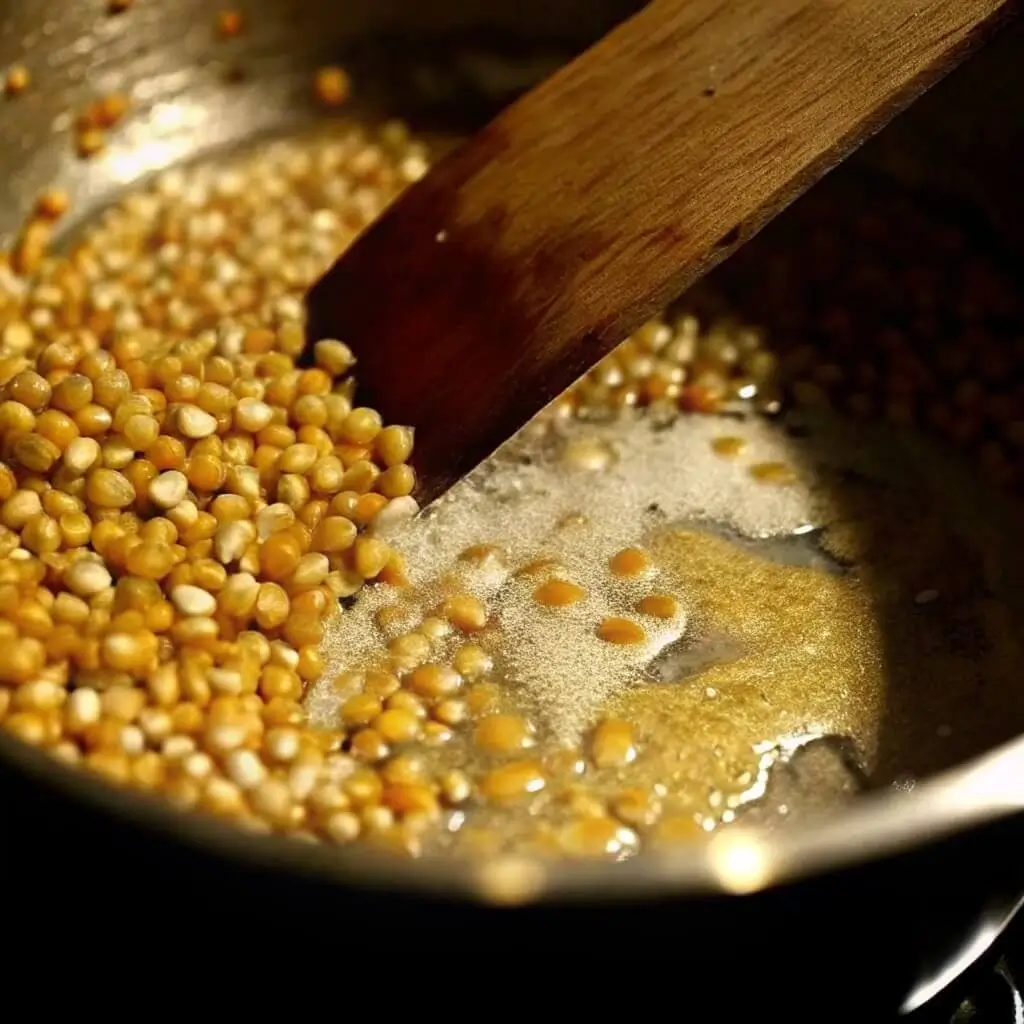
Making kettle corn at home is surprisingly quick and requires no special equipment. In just a few minutes, you can have a fresh, warm batch ready to enjoy. Here’s how to do it right every time:
Ingredients (Yield: 4 cups)
- 1/4 cup popcorn kernels
- 2 tablespoons granulated sugar
- 2 tablespoons vegetable oil
- 1/4 teaspoon salt
Instructions
- Heat the oil – In a large, heavy-bottomed pot with a lid, add the vegetable oil and 3 popcorn kernels. Heat over medium-high until the kernels pop.
- Add remaining kernels and sugar: Pour in the rest of the popcorn kernels and the sugar. Stir quickly to coat the kernels evenly.
- Cover and shake: Place the lid on the pot, then shake gently for 3 seconds, rest for 3 seconds, and repeat. This helps prevent burning.
- Listen for the popping to slow: Once the popping slows to about 2 seconds between pops, remove from the heat immediately.
- Season with salt: Pour the popcorn into a large bowl and sprinkle with salt while it’s still hot so it sticks.
- Cool slightly before serving: Let it cool for a minute or two to achieve that crisp bite. Remove any unpopped kernels before eating.
Pro Tip: Crack the lid slightly while shaking to let steam escape, this helps keep the popcorn crunchy rather than chewy.
Here’s the quick reference chart for stovetop kettle corn success:
| Step | Action | Why It Matters |
|---|---|---|
| 1 | Heat oil with 3 kernels | Tests the oil temperature |
| 2 | Add sugar with kernels | Ensures even caramelization |
| 3 | Shake in intervals | Prevents burning and uneven coating |
| 4 | Remove when popping slows | Avoids scorching sugar |
| 5 | Salt immediately | Helps seasoning stick |
Tools and Tricks for Better Popping Results
To get consistent results, the right tools and a few tricks make all the difference:
- Use a heavy-bottomed pot: It distributes heat evenly, reducing the risk of burnt sugar.
- Don’t overload the pot: Too many kernels at once can lead to uneven popping.
- Use fresh kernels: Older kernels may not pop as fully, affecting texture.
- Shake, don’t stir: Stirring can cause sugar clumps, while shaking keeps the coating light.
- Work quickly: Sugar caramelizes fast, so timing is everything.
Following these tips ensures your kettle corn turns out light, crispy, and full of flavor, every single time.
Easy Kettle Corn Variations You Can Try
Sweet & Savory Flavor Additions to Elevate Your Corn
One of the best things about kettle corn is how versatile it is. Once you’ve mastered the basic recipe, you can create endless variations by adding spices, herbs, and other seasonings. Here are a few ideas to take your batch to the next level:
- Cinnamon Sugar – Add a teaspoon of ground cinnamon along with the sugar for a warm, spiced flavor.
- Maple Glaze – Drizzle maple syrup over warm popcorn and toss to coat lightly.
- Pumpkin Spice – Add a pumpkin spice blend in place of part of the sugar for a seasonal twist.
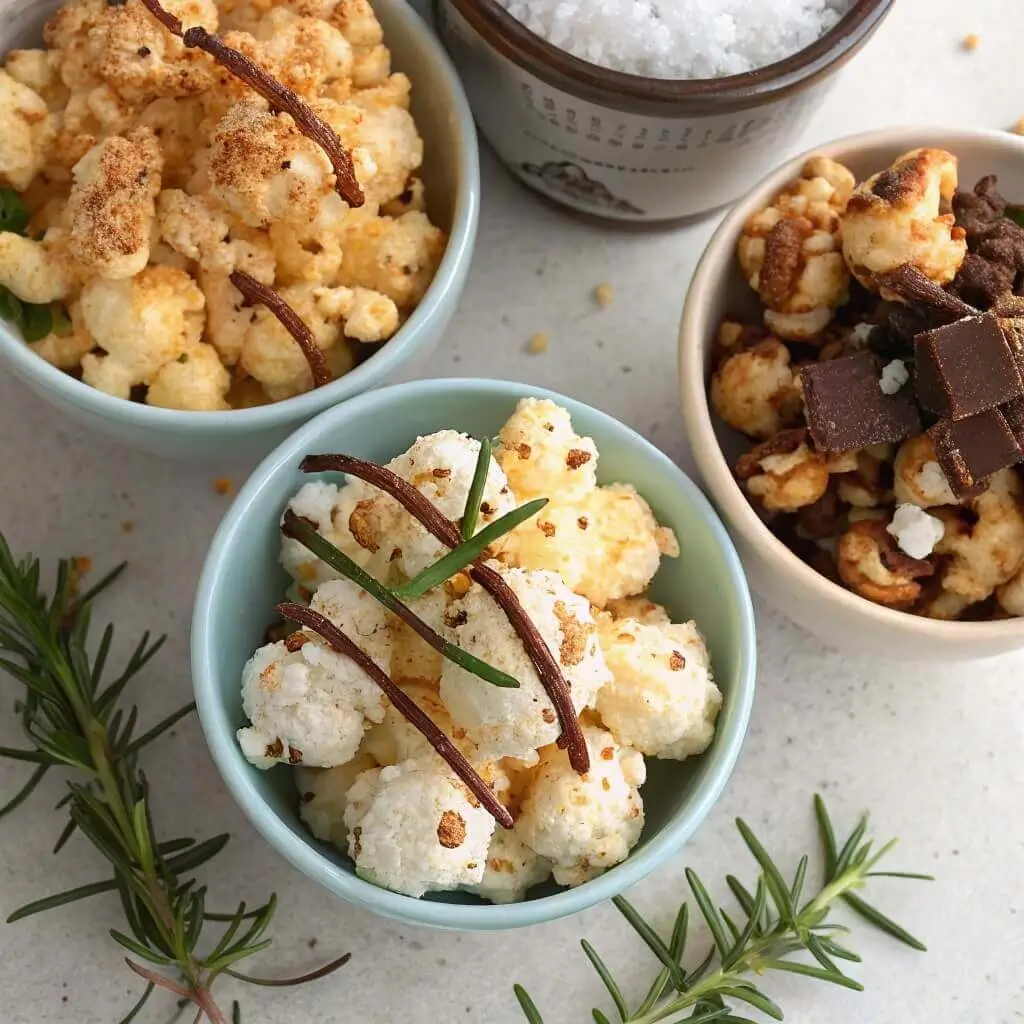
- Sea Salt & Rosemary – Sprinkle with fresh rosemary and sea salt for a fragrant, savory-sweet combo.
- Honey Drizzle – After popping, drizzle with a small amount of honey for a natural sweetness boost.
These upgrades work because kettle corn’s neutral sweet-salty base pairs well with both bold and subtle flavors.
Popular Kettle Corn Mix-ins for Every Occasion
Beyond seasonings, adding mix-ins can turn kettle corn into a party-ready snack or a personalized treat. Try these ideas:
- Chocolate Chips or Drizzle – Stir in mini chocolate chips while the popcorn is still slightly warm, or drizzle with melted chocolate once cooled.
- Dried Fruit – Add cranberries, raisins, or chopped dried apricots for a chewy contrast.
- Nuts – Toss in roasted almonds, pecans, or cashews for extra crunch and protein.
- Candy Pieces – For a fun party mix, add colorful candy-coated chocolates or crushed peppermint candies.
- Pretzels – Combine with mini pretzels for a sweet and salty snack mix.
Here’s a quick flavor pairing table for inspiration:
| Base Flavor | Mix-in Suggestions | Best Occasion |
|---|---|---|
| Cinnamon sugar | Dried apple slices, pecans | Fall gatherings |
| Sea salt & rosemary | Almonds, dark chocolate drizzle | Gourmet snack night |
| Maple glaze | Toasted walnuts, dried cranberries | Holiday parties |
| Honey drizzle | Cashews, coconut flakes | Summer picnics |
With these variations, you can make kettle corn to match any theme, holiday, or personal craving.
Is Kettle Corn a Healthy Snack Option?
Nutritional Breakdown and Serving Facts
Kettle corn often gets a reputation as a lighter indulgence compared to richer snacks like caramel corn or buttered popcorn. While it’s not a health food in the strictest sense, it can fit into a balanced diet if enjoyed in moderation.
Here’s the nutritional breakdown for one cup of homemade kettle corn (based on the recipe in Part 5):
| Nutrient | Amount per 1 cup serving |
|---|---|
| Calories | 110 |
| Sugar | 4 g |
| Sodium | 95 mg |
| Fat | 6 g |
| Saturated Fat | 1 g |
| Carbohydrates | 13 g |
| Fiber | 2 g |
| Protein | 2 g |
| Cholesterol | 0 mg |
The sugar adds some extra calories compared to plain air-popped popcorn, but the fat content stays moderate if you use just enough oil for popping. The whole-grain nature of popcorn also provides fiber, making it more filling than many processed snacks.
Comparing Kettle Corn with Other Common Snacks
When you stack kettle corn against other popular snack options, it’s clear that it can be a smarter choice in certain situations.
| Snack | Calories (per cup) | Fat (g) | Sugar (g) | Fiber (g) |
|---|---|---|---|---|
| Kettle corn | 110 | 6 | 4 | 2 |
| Butter popcorn | 120–150 | 8–12 | 0–1 | 2 |
| Potato chips | 150 | 10 | 0 | 1 |
| Caramel corn | 140–160 | 6–8 | 14–20 | 1–2 |
As you can see, kettle corn tends to have less fat than butter popcorn and much less sugar than caramel corn, making it a good “middle ground” snack for those who want a little sweetness without going overboard.
Bottom line: If you’re mindful about portion size and don’t drown it in oil or sugar, kettle corn can be a tasty, lighter alternative to many traditional snack foods.
Storing, Serving, and Gifting Kettle Corn
Best Storage Tips to Keep It Fresh
Kettle corn stays crisp and flavorful for days if stored correctly. The key is preventing moisture from softening the sugar glaze. Here’s how to make it last:
- Cool completely before storing – Any trapped steam will soften the texture.
- Use an airtight container – Mason jars, resealable plastic containers, or heavy-duty zip bags work well.
- Store at room temperature – Avoid refrigerating or freezing; cold storage can make it chewy.
- Avoid overcrowding – Pack it loosely to prevent crushing the kernels.
When stored properly, homemade kettle corn can keep for up to one week without losing its crunch.
Creative Ways to Package Kettle Corn for Gifting
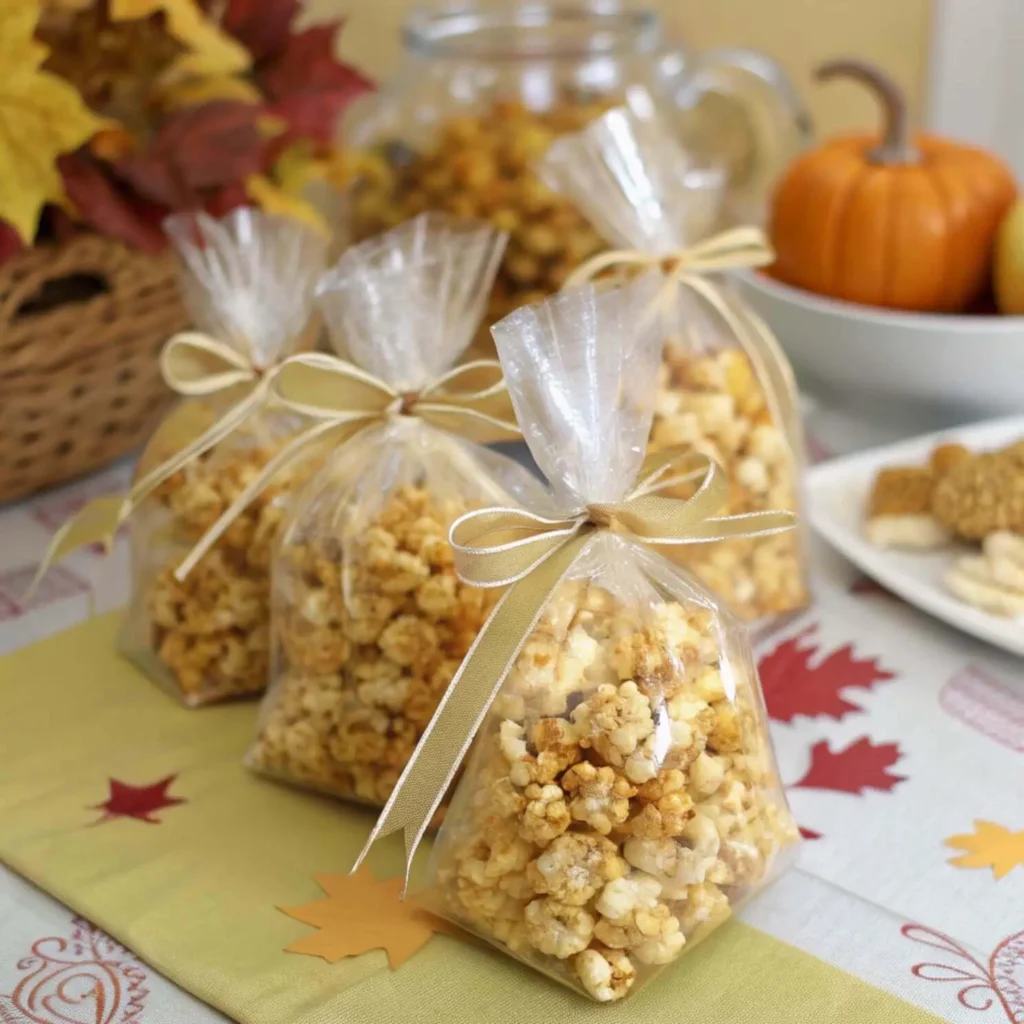
Because it’s inexpensive to make and universally loved, kettle corn is perfect for edible gifts. You can package it in fun, eye-catching ways for holidays, birthdays, or party favors.
Here are a few ideas:
- Clear cellophane bags tied with ribbon – Great for wedding or baby shower favors.
- Decorated mason jars – Add a handwritten label and a bow for a rustic feel.
- Popcorn tins – Ideal for large batches during holidays.
- Small paper cones – Perfect for a carnival or movie-themed party.
- Gift baskets – Combine with chocolate-dipped pretzels and homemade cookies.
| Packaging Style | Best For | Extra Touches |
|---|---|---|
| Cellophane bags | Party favors | Colored ribbons, custom labels |
| Mason jars | Holiday gifts | Handwritten tags, seasonal fabric lids |
| Popcorn tins | Family gatherings | Add layers of different popcorn flavors |
| Paper cones | Outdoor events | Themed stickers or printed designs |
| Gift baskets | Special occasions | Combine with other snacks or drinks |
With a little creativity, you can transform a simple batch of kettle corn into a thoughtful, homemade present that’s as enjoyable to look at as it is to eat.
Common Mistakes to Avoid When Making Kettle Corn
Burning, Soggy Texture, and Other Issues
Even though kettle corn is simple to make, a few missteps can quickly turn it from light and crunchy to burnt or sticky. Here are the most common problems:
- Burnt sugar – Adding sugar too early or cooking on heat that’s too high can cause the coating to burn before the popcorn finishes popping.
- Soggy popcorn – Not letting steam escape can cause the glaze to soften instead of crisp.
- Uneven coating – Adding sugar unevenly or stirring too much can lead to clumps rather than a light glaze.
- Unpopped kernels – Using old kernels or too little oil can leave you with lots of hard bits at the bottom.
Most of these issues come down to timing, temperature, and technique, three things that are easy to master once you know what to watch for.
How to Fix and Prevent Common Popping Problems
The good news is that all these mistakes have simple fixes:
- Prevent burning: Add sugar right after the first test kernels pop, and keep shaking the pot to avoid hot spots.
- Avoid sogginess: Crack the lid slightly while cooking to let steam escape, and cool the popcorn completely before sealing.
- Get an even glaze: Shake the pot in short bursts instead of stirring; this keeps kernels moving without clumping the sugar.
- Maximize popping: Store kernels in a dry, cool place and use a fresh batch. Heat the oil fully before adding them.
| Problem | Cause | Fix |
|---|---|---|
| Burnt sugar | Heat too high or sugar added early | Lower heat, add sugar after first pops |
| Soggy texture | Steam trapped in pot | Vent lid, cool before storing |
| Uneven coating | Over-stirring or poor sugar spread | Shake in bursts for even distribution |
| Too many unpopped kernels | Old or damp kernels | Store dry, use fresh, heat oil first |
With these tips in mind, you’ll be able to make kettle corn that’s perfectly crunchy and evenly coated, every single time.
Follow me on PINTEREST. for all of my latest blog posts, videos, and recipes.
FAQ Kettle Corn Recipe
How is traditional kettle corn made?
Traditional kettle corn is made by popping corn kernels in hot oil along with sugar and salt. The sugar caramelizes lightly during cooking, giving each kernel a thin, crisp glaze, while the salt balances the sweetness. It’s usually cooked in a large kettle or heavy pot and served fresh.
What can you add to kettle corn to make it taste better?
You can enhance kettle corn by adding flavors such as cinnamon sugar, pumpkin spice, sea salt and rosemary, or even a drizzle of melted chocolate. Nuts, dried fruit, or candy pieces also make fun mix-ins.
What’s the difference between caramel corn and kettle corn?
Caramel corn is coated in a rich caramel sauce after popping, then baked for a thicker, candy-like shell. Kettle corn, on the other hand, gets its light glaze by adding sugar during the popping process, creating a subtler sweetness.
What is kettle corn flavor made of?
The classic flavor comes from a balance of sugar, salt, and the natural nuttiness of popcorn. The sugar melts during popping to form a thin glaze, and the salt enhances both the sweet coating and the corn’s flavor.
What is the difference between kettle corn and regular popcorn?
Regular popcorn is usually popped without sugar and flavored afterward with butter, salt, or seasonings. Kettle corn is popped with sugar and salt at the same time, giving it a sweet-salty flavor and a slightly crisp texture.
What exactly is kettle corn?
Kettle corn is a sweet and salty popcorn snack that’s lightly glazed during popping. It’s traditionally made in large kettles at fairs and markets, but it can easily be prepared at home on the stovetop.
What is the difference between kettle corn and butter popcorn?
Butter popcorn is savory, often coated in melted butter or butter flavoring after popping. Kettle corn is sweet and salty, with sugar added during popping to create a glaze, making it lighter in texture than caramel corn but sweeter than butter popcorn.
Is kettle corn good or bad for you?
Kettle corn can be a relatively light snack if made with minimal oil and sugar, especially compared to caramel corn or chips. However, it’s still a treat, so moderation is key for a balanced diet.
Why Kettle Corn Deserves a Spot in Your Snack Rotation
Kettle corn isn’t just a nostalgic fair treat, it’s a quick, affordable, and crowd-pleasing snack you can make in minutes at home. With its perfect sweet-and-salty balance, light crunch, and endless flavor possibilities, it fits just as well at movie nights as it does at parties or holiday gatherings.
From learning its history and nutritional profile to mastering the stovetop method, you now have everything you need to make a perfect batch every time. By experimenting with different seasonings and mix-ins, you can keep it exciting without adding much effort.
So, grab your kernels, heat up the oil, and get ready for the irresistible smell and taste of freshly made kettle corn, because sometimes, the simplest snacks are the most satisfying.
Don’t miss our cookies and cream popcorn for another flavor-packed popcorn recipe you’ll love.